Top Signs of Electrical Hazards in Properties
A tenant reports a socket that feels warm, a light begins flickering in a communal hallway, or an extension lead is permanently running under a desk. These are the kinds of issues that can be dismissed during a busy tenancy, refurbishment or handover. Yet the top signs of electrical hazards often appear before a fault becomes a serious safety incident, costly damage or an avoidable compliance problem.
For landlords, agents, businesses and homeowners, the right response is not to diagnose live electrical work yourself. It is to recognise warning signs early, make the area safe where possible, and arrange assessment by a qualified electrician. Small defects can have several causes, so prompt inspection is the most reliable way to protect people, property and continuity of occupation.
Top Signs of Electrical Hazards to Act On
Sockets, switches or plugs that are warm, damaged or discoloured
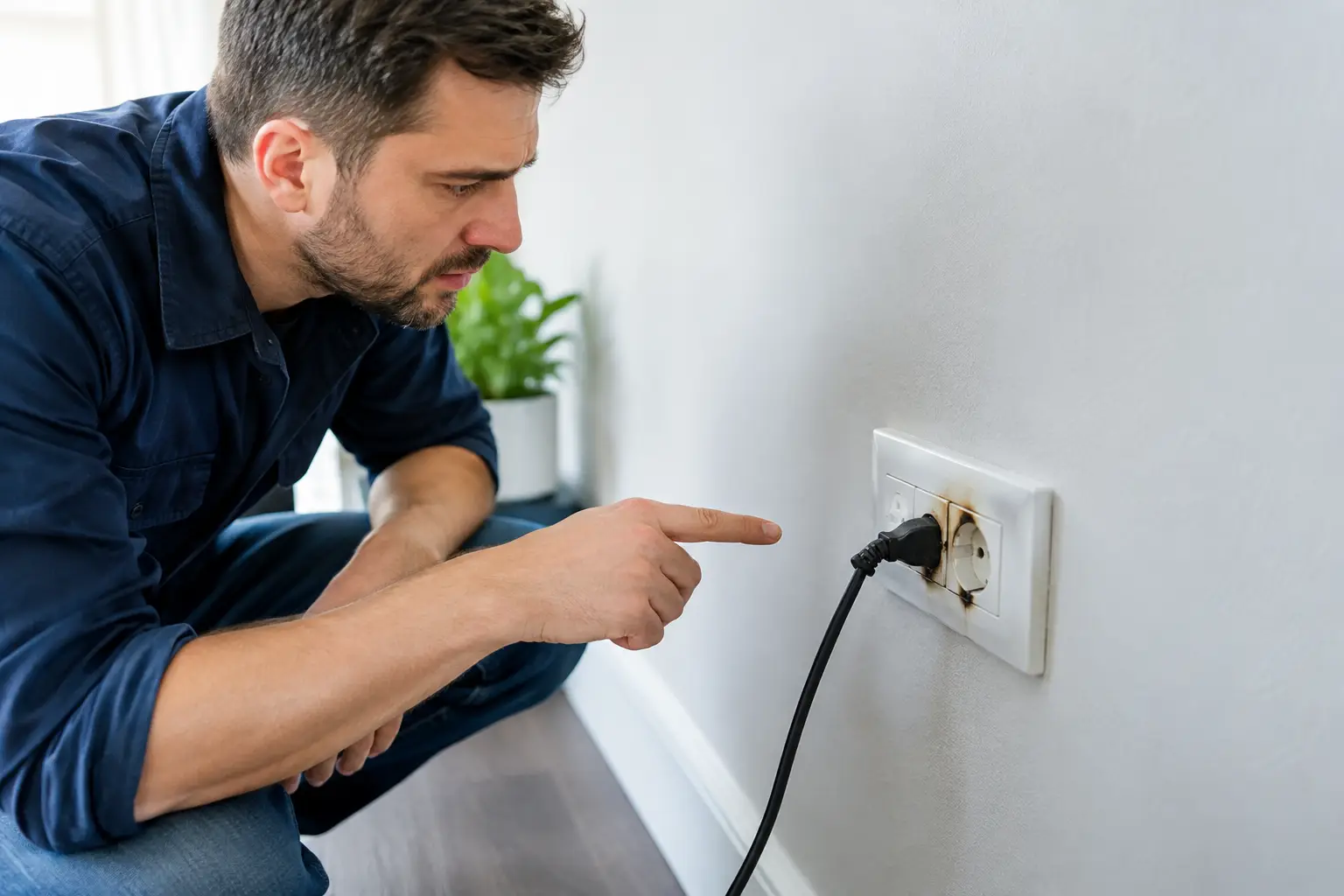
A plug, switch or socket should not become hot in normal use. Slight warmth can sometimes occur around equipment that draws a high load, but noticeable heat, scorch marks, browning plastic, cracking or a burning smell all need attention. These signs can indicate a loose connection, overloaded circuit, damaged accessory or failing appliance.
Stop using the affected point if it can be done safely. Do not keep resetting it, cover over marks with paint, or assume a replacement faceplate will solve the underlying problem. In a rented property, record the report and arrange a competent inspection. For a commercial setting, consider whether the affected circuit needs to be isolated while it is assessed, particularly if staff or visitors could access it.
Flickering lights and lights that dim unexpectedly
A single flickering lamp may be as straightforward as a loose bulb or an incompatible LED fitting. Repeated flickering across several lights, lights dimming when another appliance starts, or a light fitting that buzzes or becomes hot are different matters. They may point to a poor connection, an overloaded circuit or an issue within the fixed wiring.
This is especially relevant in older properties and during refurbishment, when new appliances, electric heating or additional lighting may have been added to an existing installation. The electrical demand may have changed even though the consumer unit and circuits have not. An electrician can test the installation and advise whether repair, alteration or a circuit upgrade is appropriate.
Circuit breakers or RCDs that keep tripping
A consumer unit is designed to cut off power when it detects a fault or potentially dangerous condition. A breaker that trips once may relate to a faulty appliance or a temporary overload. A breaker or residual current device, often called an RCD, that continues to trip should never be repeatedly forced back on without finding the cause.
Unplug portable appliances on the affected circuit where safe to do so, then seek professional advice. The fault may be in an appliance, but it can also arise from damaged wiring, moisture ingress, a defective fitting or a problem with the circuit itself. Repeated resets risk leaving occupants without essential services and can conceal an issue that is getting worse.
Burning smells, buzzing sounds or visible sparks
Electrical equipment should operate quietly and without odour. A persistent burning smell, crackling or buzzing from a socket, switch, consumer unit or light fitting deserves urgent attention. Visible sparks are also a clear warning, except for the very brief, occasional spark that can happen when plugging in certain appliances with a high inrush current. If there is any doubt, treat sparking as a fault.
If you can do so without taking risks, switch off the circuit at the consumer unit and keep people away from the affected area. Where there is smoke, fire or an immediate threat, call the emergency services. Do not use water on an electrical fire.
Frayed cables, loose fittings and exposed wiring
Portable appliance leads take a lot of wear in rental properties, offices, workshops and communal areas. Look for split insulation, taped repairs, crushed cables, loose plugs, bent pins and leads trapped in doors or under furniture. These defects can expose live parts, cause overheating or create a shock risk.
Fixed wiring concerns include loose sockets, cracked switch plates, light fittings pulling away from ceilings, open junction boxes and cable damage following drilling, leaks or pest activity. Even where no wires are visible, a fitting that moves when used should be checked. A sound installation should be secure as well as electrically safe.
Overloaded extensions and unsuitable adapters
Extension leads are useful for temporary, low-demand use. They are not a permanent substitute for enough sockets in a kitchen, office, workshop or bedroom. Daisy-chained extensions, multi-way adapters loaded with heaters, kettles, microwaves or chargers, and cables running beneath rugs can overheat or become damaged without anyone noticing.
The practical fix depends on the space. A vacant flat being prepared for letting may need additional fixed sockets in the right places. A business may need circuits planned around equipment loads and working patterns. Simply adding more adapters can make the problem worse, particularly where occupants are using portable heaters or high-powered kitchen appliances.
Water near electrical fittings
Water and electricity are an unsafe combination, but the risk is not limited to an obvious flood. A slow leak from a bathroom, roof, appliance or pipe can affect lights, sockets, extractor fans and concealed cabling. Staining around a fitting, a bathroom fan that stops working, or a socket close to damp plaster should be treated as a maintenance priority.
Do not touch electrical fittings that are wet or standing in water. Isolate power only if it is safe to do so, then arrange both leak repair and electrical assessment. Repairing the source of the water is essential, but electrical components may still require testing or replacement before they are put back into service.
Shock, tingling or a persistent static sensation
A shock or tingling feeling from a tap, appliance, metal casing or electrical fitting is not something to wait and see about. It can indicate a fault with earthing, bonding, an appliance or the fixed installation. The cause may not be obvious, and the consequences can be severe.
Stop using the item or area and have it checked urgently by a qualified electrician. Do not rely on rubber-soled footwear, gloves or a temporary workaround. The aim is to remove the fault, not work around it.
Electrical Warning Signs During Voids and Refurbishment
Empty properties can hide electrical defects because appliances are unplugged and lights are used less often. A proper void inspection should include more than a quick check that lights switch on. Note damaged accessories, missing covers, old or poorly labelled consumer units, evidence of DIY alterations and signs of water damage. If a property has been vacant for some time, issues such as damp, rodent damage or unauthorised changes by former occupants may only become clear at handover.
Refurbishment also creates risk when several trades are working around electrical systems. Drilling into walls, removing kitchens, plastering around sockets and decorating near fittings can all affect cables or accessories. Electrical work should be planned alongside the wider programme, not treated as a final snagging item once rooms are complete. This reduces rework and helps keep the property safe for the next occupant.
For landlords in England, fixed electrical installations in rented homes must be inspected and tested at the required intervals by a qualified person, with action taken on observations within the stated timescales. The exact requirement can vary by property type and use, so managed portfolios and commercial premises may need a broader approach to inspection, testing and records. Visual checks remain useful between formal inspections, but they do not replace them.
What to Do When You Spot a Potential Hazard
Start by protecting people. Keep tenants, staff, visitors and contractors away from the affected fitting or appliance, and stop using it. If isolation can be carried out safely at the consumer unit, do so. Capture clear details for the electrician: the location, what happened, whether a breaker tripped, any smell or noise, and which equipment was in use. This helps speed up fault-finding and avoids unnecessary disruption.
Avoid temporary repairs involving tape, replacement fuses of a higher rating, improvised adapters or repeated breaker resets. These actions can turn a manageable repair into a bigger problem. Where the issue affects an occupied rental property or business premises, clear communication matters as much as quick attendance. Occupants need to know what not to use and what alternative arrangements are available while work is completed.
Action Property Group supports property stakeholders across East Sussex with electrical works, testing and wider maintenance coordination, helping reduce the burden of arranging separate trades when a fault also involves water damage, making good or refurbishment work.
A property rarely gives a warning in convenient circumstances. Taking a warm socket, recurring trip or loose fitting seriously gives you the best chance to resolve the issue before it disrupts a tenancy, delays a handover or puts someone at risk.



No Comments