
How to Change Rental Locks Without Causing Problems
A lock change can be a sensible security measure, but knowing how to change rental locks starts with understanding who has the right to authorise the work. A tenant may want reassurance after moving in. A landlord may need to secure an empty property between lets. A letting agent may be managing an urgent handover. The practical job can be straightforward, but getting the access, paperwork and fire safety details wrong can create a larger problem.
For rental properties in England, treat a lock change as both a security task and a property-management decision. The aim is to protect the premises without damaging the door, compromising a fire door, restricting lawful access or creating confusion over who holds keys.
First, establish who is asking for the lock change
The right approach depends on whether the property is occupied, vacant or subject to a dispute.
A tenant is generally entitled to peaceful occupation of their home. Many tenants choose to change a lock cylinder after moving in, particularly where they do not know how many previous keys are in circulation. Before doing so, they should read their tenancy agreement carefully. It may set out requirements around alterations, keeping the landlord informed, providing access for essential repairs or returning the property with the original fittings reinstated.
Changing a like-for-like cylinder without damaging the door is very different from drilling out a lock, replacing a complete multipoint mechanism or fitting extra security hardware. If there is any doubt, tenants should ask the landlord or letting agent in writing and retain the response. It avoids disagreement at the end of the tenancy and helps ensure urgent repairs can still be arranged.
For landlords and agents, an occupied property is not simply available to enter because you hold a key. Except in a genuine emergency, access should be agreed with the tenant and appropriate notice given. Replacing locks to regain possession, where a tenancy is still in place, can amount to an unlawful eviction. If a tenant has left unexpectedly, stopped communicating or appears to have abandoned the property, take advice and follow the correct possession process rather than assuming the home is vacant.
Check the door and lock before buying anything
Not every rental lock is the same. Many uPVC and composite doors use a euro cylinder within a multipoint locking system, while timber doors may have a night latch, mortice sashlock or deadlock. Aluminium commercial doors can use different profiles and hardware again.
On a euro cylinder, the simplest replacement is usually a cylinder of the correct type and size. Measure from the central fixing screw to each outer edge of the cylinder with the door open. A cylinder that sits too far proud of the handle can be easier to attack; one that is too short may be difficult to operate. An offset cylinder is common where the internal and external measurements differ.
The new lock should suit the door, its handles and the intended use of the property. For external doors, choose a quality cylinder with appropriate security features rather than the cheapest available option. If a key-operated lock is fitted internally, consider escape in an emergency. A thumbturn cylinder can allow occupants to leave without finding a key, but the suitability depends on the door location, security risk and fire strategy.
Fire doors need extra care
A flat entrance door or communal fire door may be a certified fire door. The lock, latch, hinges, seals, closer and letterplate all work together to limit the spread of fire and smoke. Fitting incompatible ironmongery, altering the door edge or preventing it from closing properly can affect its performance.
Do not add a surface bolt, chain or lock that could prevent safe escape. For HMOs, blocks of flats and commercial premises, door locking arrangements may also form part of a wider fire risk assessment. Where a fire door is involved, use a competent contractor who understands compatible hardware and can check that the door closes, latches and performs as intended after the work.
How to change a rental lock cylinder safely
Where the existing door uses a standard euro cylinder and there is no fire-door or access-control complication, the process is usually limited to replacing the cylinder rather than dismantling the whole lock.
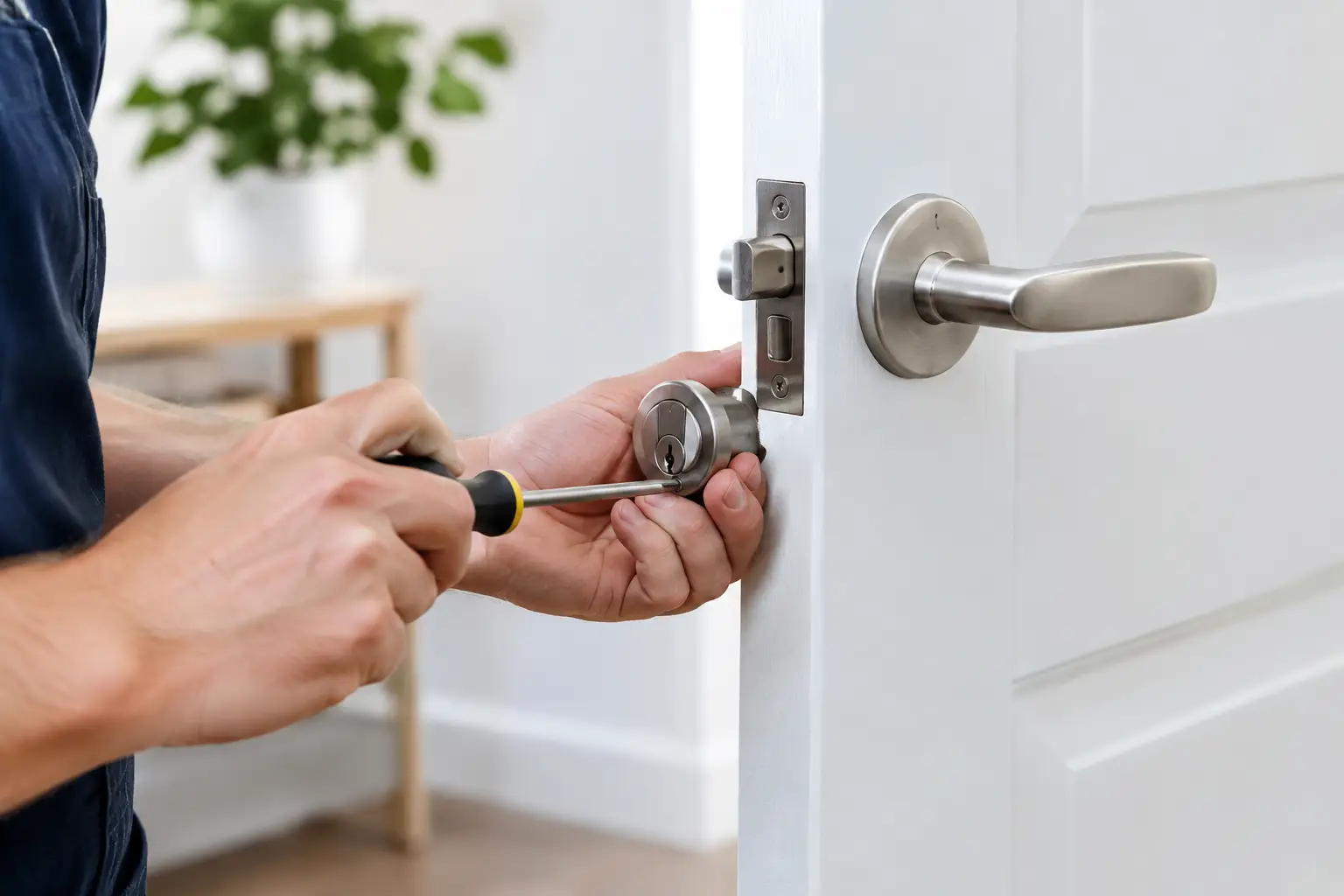
Open the door first. Locate the long retaining screw on the edge of the door, level with the cylinder. Remove this screw, insert the key and turn it slightly until the cam aligns with the body of the cylinder. The old cylinder should then slide out. If it resists, do not force it. A small adjustment of the key position is normally all that is needed.
Insert the new cylinder with its key, again aligning the cam, then refit the retaining screw. Test the key from both sides with the door open before closing it. Finally, close the door and check that the handle lifts smoothly, the bolts engage fully and the key turns without excessive force.
If the door will not lock, the issue may be with alignment rather than the new cylinder. A dropped door, worn keeps, faulty handles or a failing multipoint mechanism can put pressure on the lock. Forcing the key may damage the cylinder or leave the property insecure. This is the point to arrange a repair rather than continue experimenting.
Keep a clear key and access record
A successful lock change is not complete until everyone with a legitimate need for access knows what has changed. For landlords and letting agents, record the date, property address, door location, reason for the change, lock type, number of keys issued and who received them. This is particularly useful at void stage, when several contractors may need planned access for cleaning, repairs, decorating and compliance work.
Tenants should keep the original cylinder and all original keys somewhere safe if they intend to refit them before leaving. They should also ensure that essential repairs can be reported and access arranged at a mutually agreed time. There is no benefit in a new lock if an urgent leak, electrical fault or safety issue becomes harder to deal with because no one has a workable contact arrangement.
For managed portfolios, consider a restricted key system or a documented key-safe process where appropriate. This can improve control, but it must be managed carefully. Key safes should not be treated as a substitute for proper authorisation, tenant communication or secure key handling.
When a professional lock change is the better option
DIY replacement makes sense only when the lock is straightforward, the correct part is known and there is no effect on fire safety or the wider door mechanism. Call a competent locksmith or maintenance contractor when the key has snapped, the door is jammed, a multipoint lock has failed, the property has suffered a break-in, or the lock is fitted to a fire door.
It is also worth using a professional during a void turnaround. A contractor can change locks, inspect the condition of the door and frame, identify damage, check handles and closers, and coordinate related works while the property is empty. That reduces the risk of handing over a flat with a fresh cylinder but a door that does not lock, shut or meet the building’s fire-safety requirements.
Action Property Group supports landlords, agents and property managers across East Sussex with lock changes, fire-door works and wider void maintenance, helping bring properties back to a safe, occupation-ready standard without the need to coordinate several separate trades.
A practical approach for tenants, landlords and agents
For tenants, the safest route is to check the agreement, choose a reversible change where possible, keep the original parts and communicate clearly. For landlords and agents, plan lock changes at the start and end of tenancies, maintain an accurate key record and never use a lock change as a shortcut around the legal possession process.
The right lock change should leave the property more secure, the door working correctly and everyone clear about access. That is the standard worth aiming for, whether you manage one rental home or an entire portfolio.



No Comments