
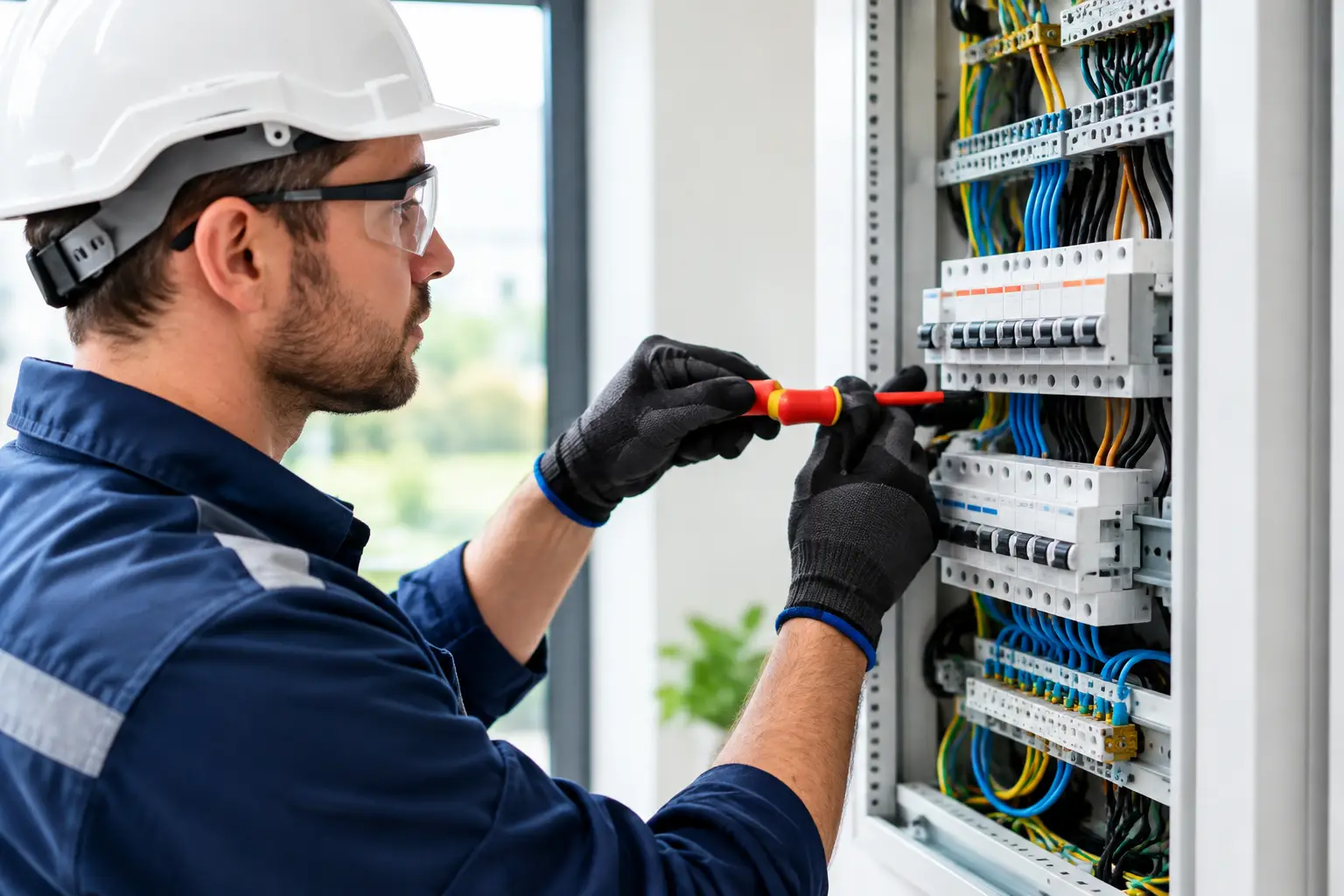
Electrical Safety Trends for Safer Properties
A failed socket, overloaded extension lead or ageing consumer unit can quickly turn a routine maintenance issue into a safety risk, an insurance question or a delayed tenancy. The most useful electrical safety trends are not about adding technology for its own sake. They are about spotting faults earlier, keeping clear records and making sure a property remains safe to occupy between inspections.
For landlords, letting agents, housing providers and business owners, the focus is shifting from reactive repairs to planned electrical safety management. That means understanding where risks are changing and where professional testing, repair and clear communication can prevent unnecessary disruption.
Electrical safety trends affecting managed properties
More focus on preventative testing
Electrical Installation Condition Reports, commonly known as EICRs, remain a central part of electrical safety for rented homes. In England, private landlords must ensure electrical installations are inspected and tested at least every five years by a qualified person, or sooner if the report recommends it.
The wider trend is to treat the EICR as a working maintenance document rather than a certificate to file away until the next renewal date. Observations on a report can identify deterioration, unsuitable equipment or circuits that need attention before they become a fault. Where remedial works are needed, dealing with them promptly protects occupants and avoids last-minute pressure before a new tenancy, inspection or sale.
Commercial properties need a similarly planned approach, although the appropriate inspection interval depends on the type of premises, how it is used and the condition of the installation. A busy office, communal area, workshop and vacant retail unit do not carry the same level of wear or risk.
Consumer units and protective devices under closer scrutiny
Older fuse boards may still be functioning, but that does not always mean they offer the protection expected in a modern property. Modern consumer units typically use residual current devices, or RCDs, and residual current circuit breakers with overcurrent protection, known as RCBOs. These devices are designed to disconnect a circuit quickly when they detect a fault.
This matters particularly in rental homes where residents use more plug-in equipment, chargers and kitchen appliances than an installation may originally have been designed to support. An electrician does not automatically need to replace every older consumer unit. The decision depends on the condition of the installation, the protection in place, the findings of inspection and any planned alteration work.
However, a consumer unit upgrade can be sensible when remedial work is extensive, circuits need separating, additional capacity is required or the existing board cannot safely accommodate modern protective devices. It should be part of a clear plan, not a rushed response to a failed inspection.
Electric vehicle charging needs proper design
Electric vehicle charging is becoming a more common request at houses, flats, workplaces and managed sites. It can add value and convenience, but it also introduces a significant new electrical load. A standard domestic socket is not a substitute for a properly designed charging point.
Before fitting a charger, an electrician should consider the supply capacity, earthing arrangement, consumer unit capacity, cable route and the effect on other electrical demand. For blocks of flats and commercial sites, future charging requirements also matter. Installing one charger without considering how further units could be added can create avoidable cost later.
The practical trend is towards load management and forward planning. This helps owners provide charging provision without overloading the installation or carrying out repeated disruptive work as demand grows.
Better reporting is part of safer electrical management
Electrical safety is not only about fixed wiring. Many problems are first noticed by tenants, staff or caretakers: a socket that feels hot, lights that flicker, a circuit that repeatedly trips or a damaged flex on supplied equipment.
Properties are safer when people know what to report and receive a clear response. A tripping circuit should not simply be reset repeatedly. It may indicate a faulty appliance, damaged cable, moisture ingress, overloaded circuit or another defect that needs investigation.
For agents and portfolio managers, a straightforward reporting process makes a real difference. Record the location, what was being used at the time, whether there was a smell, heat, visible damage or loss of power, and whether the issue has happened before. This gives the attending electrician useful information and helps determine whether the matter is urgent.
The same applies to vacant properties. Empty homes can conceal faults for weeks, particularly after water leaks, unauthorised access or refurbishment work. A pre-let or post-void check can identify obvious concerns before keys are handed over.
Electrical safety and refurbishment now need to work together
Refurbishment projects can expose hidden issues. Removing old kitchen units may reveal damaged sockets. Decorating can uncover cracked accessories. New appliances, electric showers, extractor fans or lighting can change the load on existing circuits.
One of the most sensible electrical safety trends is earlier coordination between trades. Electrical requirements should be considered before plastering, decorating, kitchen fitting or flooring begins, not after finishes are complete. This reduces rework and avoids drilling into concealed cables or trying to extend unsuitable circuits as an afterthought.
For a landlord preparing a void property, combining electrical checks with other essential works can also shorten the turnaround. Electrical remedials, fire safety tasks, lock changes, cleaning and decoration are easier to programme when one contractor can coordinate the work in the right order.
Smart monitoring has a role, but not a substitute for inspection
Smart devices are increasingly used to alert owners to power loss, unusual energy use, overheating or equipment faults. In some commercial settings, monitoring can be useful for identifying patterns that would otherwise go unnoticed, such as a circuit that regularly overloads at a particular time.
There are limits. A smart plug cannot confirm that a fixed electrical installation is safe, and an app notification cannot replace professional testing. Devices also need suitable installation, reliable connectivity and someone responsible for acting on alerts.
The strongest use of monitoring is as an additional layer. It can help a property manager respond sooner, but formal inspection, competent electrical work and good records remain the foundation of compliance.
What property managers should prioritise
The most effective approach is to keep electrical safety visible throughout the property lifecycle. Before occupation, confirm that inspection requirements are met and any remedial work has been completed. During a tenancy or commercial occupation, respond to fault reports properly rather than repeatedly applying temporary fixes. During refurbishment or a change of use, check whether the existing installation is suitable for the new demand.
It is also worth keeping certificates, reports, invoices and details of remedial works together for each property. Clear records support compliance, make future testing more efficient and give owners confidence that works have been completed to a proper standard.
For properties across East Sussex, Action Property Group can help coordinate electrical testing, remedial works and wider property maintenance so safety issues do not delay occupation or handover. The right time to address an electrical concern is usually when the first warning sign appears, not when an inspection date or tenant move-in is already approaching.



No Comments