How to Remediate Water Damage in a Rental Home
A leaking washing-machine hose can soak a kitchen floor in minutes. A failed roof covering may take longer to show itself, but can quietly damage insulation, ceilings and timber for weeks. Knowing how to remediate water damage quickly helps landlords, agents and homeowners limit repair costs, protect occupants and return a property to a safe, lettable condition.
The correct response depends on where the water came from, how far it has travelled and how long materials have remained wet. The visible stain is rarely the whole job. Water can move behind skirting boards, into wall cavities, beneath flooring and through electrical fittings. A prompt, methodical approach is far more effective than simply drying the surface and redecorating.
How to Remediate Water Damage: First Priorities
The first priority is to stop the source of water. Turn off the local isolation valve or the mains supply where necessary, and arrange an emergency repair to the failed pipe, appliance, roof, gutter or drainage connection. If the issue is coming from an adjoining property, notify the owner, managing agent or freeholder straight away. Delays can turn a contained leak into a multi-room repair.
Safety comes next. Do not enter an area where water may have reached sockets, consumer units, light fittings or electrical appliances. Isolate the electricity only if it is safe to do so, and have electrical installations checked by a competent electrician before they are put back into use. Water-damaged electrics may appear to work normally while presenting a serious risk.
If tenants occupy the property, give them clear instructions about affected rooms, electricity, heating and access for inspections. They need to know who is attending, what they should avoid using and whether temporary accommodation or alternative facilities may be needed. Good communication reduces disruption and creates a clear record of the response.
Take dated photographs and videos before moving contents or beginning strip-out work, provided this can be done safely. Record the apparent cause, affected areas, actions taken and conversations with tenants or neighbouring owners. This evidence supports insurance discussions, helps identify recurring defects and gives contractors a clearer starting point.
Assess the Water and the Extent of Damage
Not all water damage carries the same health risk. Water from a clean, recently failed supply pipe is generally less contaminated than water from a washing machine discharge, overflowing drain, sewage backup or external flooding. Water that has sat for some time can also become contaminated, particularly where it has passed through dirty materials or stagnant areas.
Where foul water, floodwater or sewage is involved, avoid attempting a basic clean-up with household products. Contaminated porous materials such as carpets, underlay, plasterboard, insulation, chipboard furniture and some kitchen units may need removal. Professional cleaning, appropriate personal protective equipment and controlled waste disposal may be required before the property can be safely occupied.
A proper assessment should look beyond the obvious wet patch. Check adjoining rooms, ceilings below bathrooms, cupboards, service risers, floor finishes and external walls. In rental properties, inspect for damage to fire doors, door closers, smoke alarms, ventilation systems and safety-critical electrical equipment. These items should not be treated as cosmetic repairs.
Moisture meters and thermal imaging can help establish whether walls, floors and timber are still wet behind finished surfaces. This is particularly useful after a slow leak, where mould may be developing before staining becomes obvious. It may be necessary to lift sections of flooring or remove damaged plasterboard to establish the full extent of the problem. That can feel disruptive, but leaving trapped moisture in place often leads to a larger repair later.
Remove Water and Begin Controlled Drying
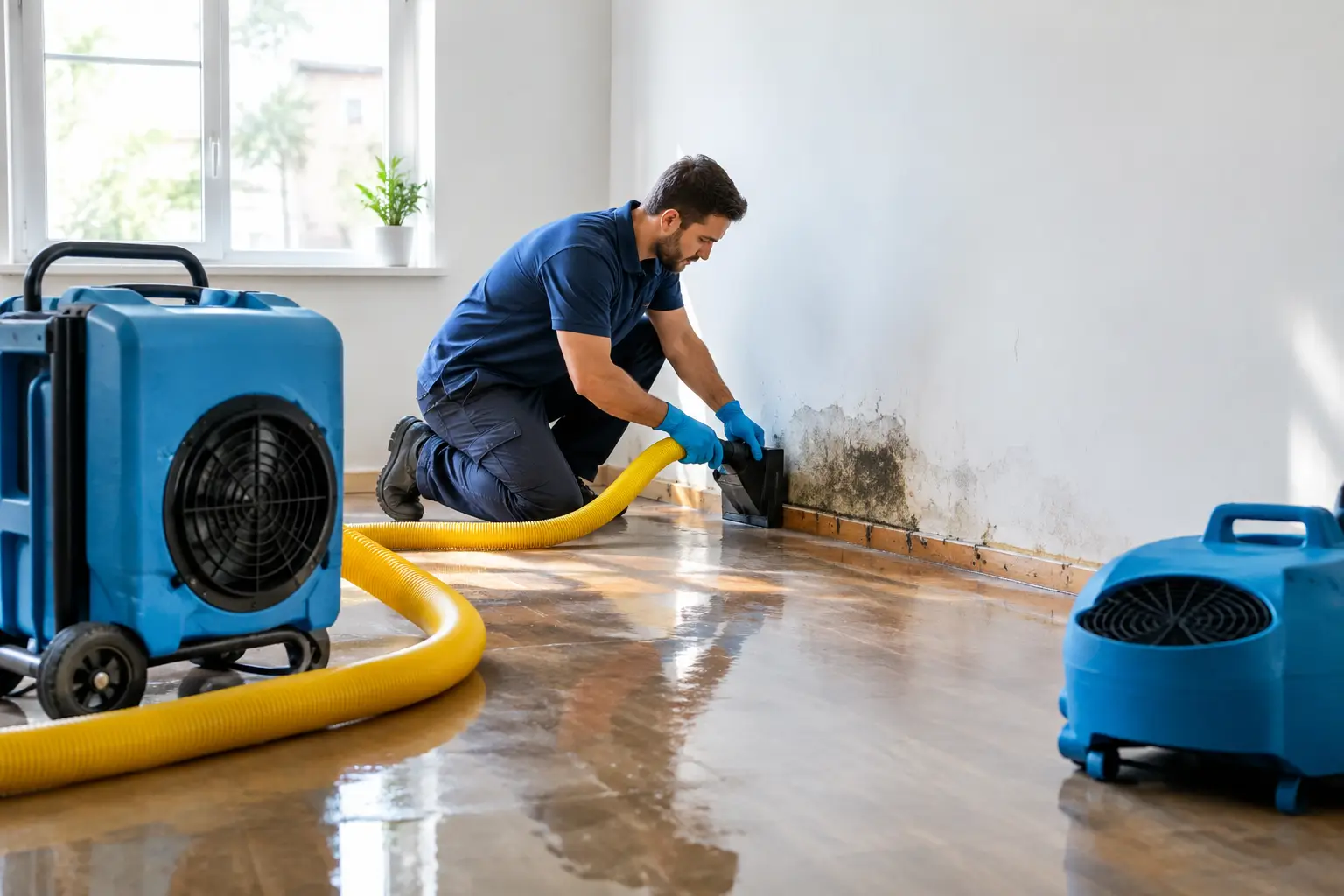
Once the property is safe and the water source is controlled, remove standing water as quickly as possible. Depending on the scale of the incident, this may involve wet vacuums, pumps, absorbent materials or specialist extraction equipment. Move unaffected furniture and belongings out of the area where possible, but avoid dragging saturated items across dry rooms.
Drying is not simply a case of opening windows. Ventilation can help in suitable weather, but cold or damp outdoor air may not be enough to dry structural materials effectively. Dehumidifiers and air movers are often needed to reduce moisture levels in a controlled way. Heating may also assist, but it should not be used aggressively on wet timber or plaster, as rapid drying can cause cracking, warping or further damage.
Do not relay carpets, reinstall skirting boards or repaint until affected materials have dried to an acceptable moisture level. A room can feel dry while timber floors, wall plates and plaster remain damp. Reinstatement too early can trap moisture, encourage mould growth and undermine new finishes.
For a minor, clean-water spill caught quickly, lifting a small area of flooring, drying it thoroughly and monitoring moisture may be sufficient. A leak that has affected ceilings, insulation, several rooms or a void property requires a more structured drying plan. The cost of professional drying is often justified by avoiding damaged finishes, mould treatment and extended void periods.
Decide What Can Be Saved and What Must Be Replaced
The aim is to preserve sound materials where possible, not to replace everything automatically. Solid timber may often be dried and repaired, while swollen chipboard flooring usually loses its structural integrity and needs replacement. Ceramic tiles can sometimes remain in place, but moisture below them may have damaged adhesive, boards or the subfloor.
Plasterboard that has become saturated commonly needs cutting back to a dry, sound level. Insulation can retain water and lose its effectiveness, so should be assessed carefully, especially in external walls, loft spaces and ceilings. Skirting boards, architraves and kitchen plinths may be salvageable if removed early and dried, but replacement is often the cleaner option where swelling or mould has occurred.
Mould should be treated as a moisture-control issue first. Surface cleaning alone will not resolve it if a hidden leak, cold bridge or inadequate ventilation remains. Identify and correct the cause, dry the affected structure, remove compromised porous materials where appropriate, then carry out cleaning and redecoration using suitable products.
Plan Repairs Around Safety and Occupation
A water-damage repair programme should restore more than appearance. Before occupation or handover, ensure affected electrical circuits have been inspected, heating and hot water are functioning, ceilings are secure, floors are safe to walk on and any damaged fire-safety features have been repaired or replaced. If a leak has affected a fire door, its frame, seals, hinges or closer, it needs proper attention rather than a quick cosmetic patch.
For landlords and letting agents, consider whether the property remains fit for occupation while works are under way. A contained leak in a utility room may be manageable with clear precautions. Loss of safe electricity, sanitation, heating, kitchen facilities or bedroom space may require a different arrangement. The right decision depends on the scale of damage, the household’s needs and the likely duration of works.
Co-ordinating drying, electrical checks, plastering, joinery, flooring, decorating and cleaning through one maintenance partner can reduce delays between trades. Action Property Group supports property stakeholders across East Sussex with practical repair and refurbishment work designed to help properties return to a safe, well-presented, occupation-ready standard.
Prevent the Next Incident
Once repairs are complete, use the incident to address the underlying risk. Check flexible appliance hoses, stop taps, sealant around baths and showers, roof coverings, gutters, downpipes, external drainage and ventilation. In vacant properties, regular inspections are particularly valuable during colder weather, when a small failure can go unnoticed for days.
Keep photographs, invoices, moisture readings, inspection notes and certificates with the property records. These documents demonstrate a responsible response, support future maintenance planning and can be useful if the issue returns.
Water damage is stressful because it creates uncertainty as well as mess. Acting early, drying thoroughly and repairing the cause – not just the visible mark – gives the property its best chance of a safe, lasting recovery.




No Comments