
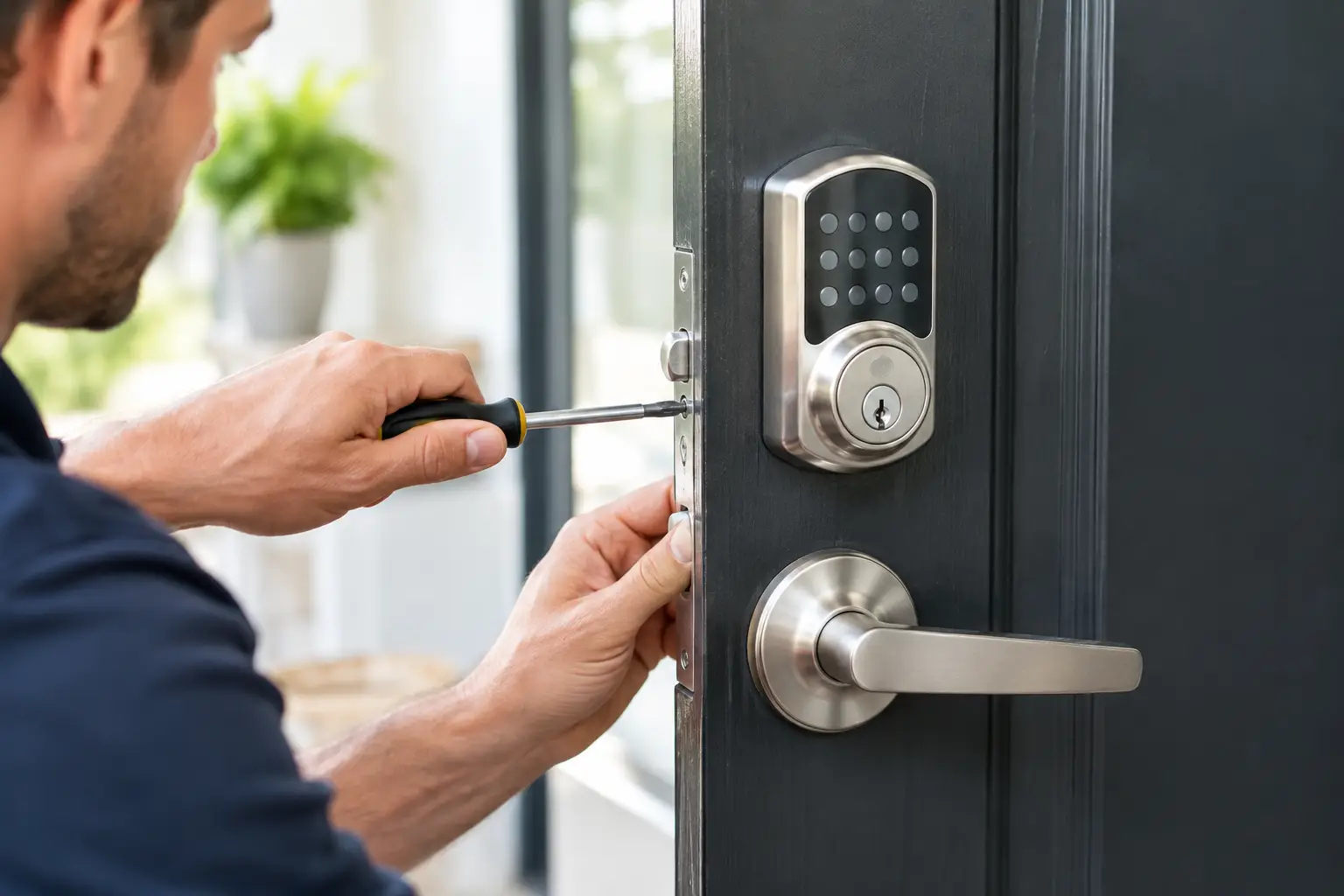
Landlord Lock Upgrade Options That Work
A lock change is often treated as a quick job between tenancies. In practice, it is one of the clearest opportunities to improve security, control access and avoid a last-minute problem at check-in. The right landlord lock upgrade options depend on the door, the building, the tenant profile and whether fire safety requirements apply. A better lock is not always the most expensive one. It is the one that suits the property and has been fitted properly.
For landlords and managing agents, the priority is straightforward: protect the property, give the incoming tenant confidence that previous keys no longer work, and keep the home safe and ready for occupation without unnecessary disruption.
Start with the door, not the lock
Before choosing an upgrade, assess the door construction and its existing hardware. A strong cylinder fitted to a weak uPVC door handle, a loose timber frame or a poorly aligned multipoint mechanism will not deliver the security expected. Similarly, changing a lock on a fire door without checking its certification and closing action can create a compliance issue.
External timber doors, composite doors, uPVC doors and communal entrance doors all have different requirements. A property with standard euro-cylinder locks may only need new cylinders, while another may need a new handle set, keep plate adjustment or repair to the locking mechanism. Where there has been an attempted break-in, it is worth checking the door frame, hinges and glazing as well as the lock itself.
This assessment also prevents unnecessary replacement. If the door and mechanism are sound, a cylinder upgrade can be a cost-effective improvement. If the hardware is worn or damaged, replacing only the cylinder may leave the underlying fault unresolved.
Landlord lock upgrade options for common rental properties
Replace the cylinder between tenancies
Replacing the cylinder is one of the most practical options for doors using euro-profile or rim cylinders. It ensures former tenants, contractors or unreturned key holders cannot access the property with an old key. It is usually quicker and less disruptive than changing the complete lock case or door furniture.
For a typical rental property, choose a cylinder that matches the correct size and sits flush with, or slightly recessed from, the handle. A cylinder that projects too far can be easier to grip and attack. Correct measurement and fitting matter as much as the product selected.
Upgrade to an anti-snap security cylinder
Many modern uPVC and composite doors use euro cylinders. Older or basic versions can be vulnerable to snapping if the lock protrudes from the door. Anti-snap cylinders are designed to break in a controlled way while protecting the internal locking mechanism.
For higher-risk locations or ground-floor access points, look for cylinders with recognised security ratings, such as TS 007 three-star or Sold Secure Diamond accreditation. They may offer additional resistance to snapping, drilling, picking and bumping. The exact specification should still be compatible with the existing door and handle arrangement.
This is often a sensible upgrade where a landlord wants stronger security without replacing a serviceable multipoint locking system. It is particularly relevant for vacant properties, homes with rear access or properties that have previously experienced attempted forced entry.
Fit security handles alongside the cylinder
A high-security cylinder performs best when paired with suitable door handles. Security handles can shield the cylinder, reduce exposure and make it harder to gain purchase during an attack. On uPVC and composite doors, this combination can offer a meaningful step up from basic handle and cylinder sets.
It is not a case of fitting the strongest available handle to every door. The handle must match the fixing centres, spindle, backplate and lock mechanism. Poorly matched hardware can affect the operation of the multipoint lock and lead to avoidable call-outs.
Change traditional mortice locks on timber doors
Many timber front and back doors use a mortice sashlock or deadlock, sometimes with a separate night latch. Where a lock is dated, damaged or has an uncertain key history, replacement is usually the safest approach.
For external timber doors, landlords should consider an appropriately rated five-lever mortice deadlock where the door and insurance requirements call for it. The lock should be fitted into a sound door and frame, with a correctly secured keep plate. A quality lock fitted badly can still be forced if the frame splits or the strike plate is inadequately fixed.
If the property has a night latch, an automatic deadlocking model may improve security, but tenants need clear instruction on how it works. The aim is to reduce the risk of a door being left insecure, not to make everyday access confusing.
Use restricted keys where access control matters
Standard keys are easy to copy, often without a landlord knowing. Restricted key systems add control by limiting who can obtain duplicates and by keeping a clearer record of issued keys. They can be useful for shared houses, managed blocks, commercial units and portfolios with frequent contractor access.
There is a cost trade-off. Restricted keys and replacement cylinders are generally more expensive than standard alternatives, and key management needs a clear process. For the right property, however, avoiding uncontrolled copies can be worth far more than the initial outlay.
Smart locks: useful, but not automatically the answer
Smart locks can allow access by code, app, fob or temporary digital key. They can be useful for short-term lets, managed accommodation, offices and properties where access changes regularly. A time-limited code can reduce the need to collect keys from tenants, cleaners or contractors, and an access log may help resolve disputes about attendance.
However, smart access is not a universal upgrade. The lock must be suitable for the door, secure when power or connectivity is interrupted, and manageable for the tenant. Batteries must be monitored, emergency access must be planned, and any app-based system should be considered carefully from a data protection and privacy perspective.
For a long-term single tenancy, a high-quality mechanical lock with disciplined key control may be simpler and more reliable. Smart locks work best when they solve a real operational issue rather than being added for novelty.
Do not overlook fire doors and communal entrances
Locks on fire doors require particular care. A fire door is a tested assembly, and changes to the lock, latch, closer, hinges or door leaf can affect its performance. In many settings, the door must close and latch correctly without tenants needing to lock it manually in an emergency.
Never assume a standard lock change is suitable for a flat entrance fire door or a communal fire door. The replacement hardware needs to be compatible with the door’s fire rating and intended function. Alterations may also need to align with the building’s fire risk assessment and any managing agent requirements.
Communal entrances create another balance. Residents need convenient, reliable access, while the building needs control over fobs, keys and released entry. A lock upgrade should consider the full access route, including gates, common doors, individual flat doors and any master-key arrangement. Replacing one part without reviewing the system can create weak points or leave residents carrying an impractical number of keys.
Build lock changes into the void process
The best time to deal with locks is before the next tenant arrives, alongside cleaning, repairs, decorating and safety checks. Waiting until move-in day risks delay, extra attendance and a poor first impression.
A simple handover record should show which locks were changed, how many keys or fobs were issued, who received them and whether any master keys exist. Photographing door condition and recording the lock type can also make future maintenance easier. If a tenant reports a stiff lock later, the contractor has a useful starting point rather than having to diagnose the whole door history from scratch.
Where a tenant has lost keys, suffered a break-in or separated from a person who may hold a key, a prompt lock change is usually the sensible response. Consider the wider security position too: postal keys, garage remotes, window locks, gate codes and communal fobs may all need attention.
Choose a proportionate upgrade
A one-bedroom flat with a sound composite entrance door may need nothing more than a correctly sized, high-security cylinder and controlled key issue. A shared house with several external doors may benefit from a planned keyed-alike or restricted key system. A converted building with fire doors requires a more careful, compliance-led specification.
The common mistake is buying hardware first and checking suitability later. A professional survey can identify whether the issue is the cylinder, the handle, the mechanism, the frame or the entire access arrangement. It also helps ensure work is completed cleanly, keys are accounted for and the property is ready for its next occupant.
For landlords across East Sussex, Action Property Group can assess door security as part of wider void, repair and compliance work. That means lock changes can be coordinated with fire door checks, decorating, cleaning and remedial repairs rather than becoming another contractor to organise.
A well-chosen lock upgrade does more than secure a door. It gives tenants a safer start, gives managers clearer control of access and removes one more avoidable risk from the next handover.


No Comments