
When Is PAT Testing Needed for Your Property?
A portable appliance with a worn lead, cracked plug or damaged casing can turn a routine tenancy visit into a safety issue very quickly. So, when is PAT testing needed? The practical answer is when it forms part of a sensible system for keeping electrical equipment safe – not simply because a sticker says it is due.
For landlords, letting agents, businesses and anyone responsible for a managed property, PAT testing provides a clear record that portable electrical appliances have been checked. It can support compliance, reduce avoidable risk and help identify faults before a tenant, employee or visitor uses unsafe equipment. The right frequency, however, depends on the appliance, its environment and how it is used.
What PAT testing covers
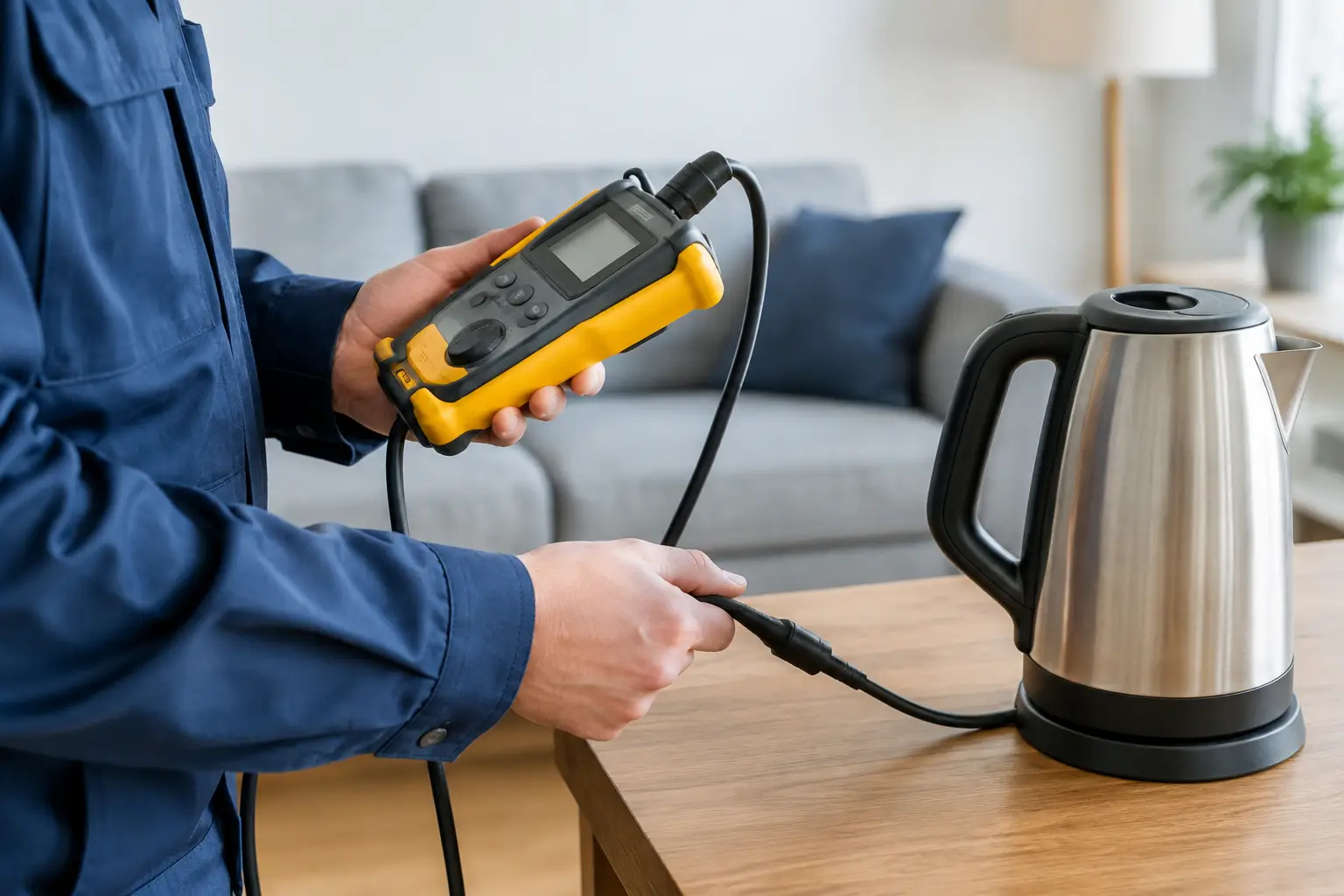
PAT stands for Portable Appliance Testing. The term is commonly used to describe a combination of visual inspection and electrical testing for equipment that plugs into a socket or is connected to a flexible cable. Typical examples include kettles, microwaves, extension leads, desk lamps, vacuums, fans, power tools and portable heaters.
A competent tester will normally check the plug, cable, casing, fuse and signs of overheating or damage before carrying out appropriate electrical tests. These can identify faults that are not visible from the outside, such as a damaged earth connection or reduced insulation.
PAT testing does not replace an Electrical Installation Condition Report, often called an EICR. An EICR concerns the fixed installation: the consumer unit, circuits, sockets, switches and fixed wiring. A portable appliance test concerns the item plugged into that installation. Well-managed properties often need both, but they deal with different risks.
When is PAT testing needed under UK rules?
There is no single UK law stating that every appliance must have an annual PAT test. Nor is there a legal requirement to use the phrase “PAT testing” or attach a pass label to every item. What the law requires is that electrical equipment is maintained so that it is safe for use.
For workplaces, the Electricity at Work Regulations 1989 place duties on employers and those in control of electrical systems to prevent danger. The level of checking should be based on risk. For rental homes, landlords must ensure that supplied electrical equipment is safe, alongside meeting their separate duties for the fixed electrical installation.
This means testing is needed where it is a reasonable and proportionate way to demonstrate that appliances are being maintained safely. In practice, regular PAT testing is particularly advisable in the following situations:
- A landlord provides portable appliances as part of a furnished or part-furnished tenancy.
- A business supplies equipment for staff, contractors or customers to use.
- Appliances are used in communal areas, offices, workshops, holiday lets or vacant properties.
- Equipment is moved frequently, used heavily, exposed to dust, moisture or outdoor conditions, or has a history of damage.
- A tenancy change, property handover or insurance requirement calls for clear evidence of appliance condition.
The emphasis should be on the condition and use of the equipment, rather than testing every item at the same interval regardless of risk.
Landlords and letting agents: what requires attention
If you supply an appliance to a tenant, you remain responsible for ensuring it is safe at the point it is provided and maintained appropriately during the tenancy. This includes items left for convenience, not only major white goods. A supplied toaster, floor lamp or extension lead still needs to be safe.
A visual check should happen more often than formal electrical testing, especially at void inspections and before a new tenant moves in. Look for loose plugs, taped cables, scorch marks, broken controls, exposed wiring and unsuitable extension leads. Any item showing damage should be removed from use immediately, not left in place until the next scheduled test.
For a low-use appliance in a clean, dry domestic setting, a longer testing interval may be reasonable if inspections show it remains in good condition. A vacuum cleaner used repeatedly by cleaning teams across a portfolio, or a heater used in a damp communal area, presents a different level of risk and usually merits more frequent checks.
PAT testing should also be part of a wider handover process. Before occupation, check the appliances supplied, smoke and carbon monoxide alarm arrangements, the condition of the property and the status of required electrical installation work. Keeping these jobs coordinated avoids last-minute delays and gives tenants a safer, better-presented home.
Businesses and managed premises: set intervals by risk
There is no universal annual deadline for commercial equipment either. Annual testing is common because it is easy to schedule and record, but it is not automatically the correct interval for every workplace.
An office computer that stays on one desk may only need routine user checks and periodic formal inspection. By contrast, extension leads, cleaning equipment, kitchen appliances, portable heaters and hand tools are more likely to be moved, knocked or used in demanding conditions. They need closer attention.
A practical risk assessment should consider where the item is used, who uses it, how often it is moved, whether it has a metal casing, and how likely the cable or plug is to be damaged. Equipment used outdoors, on refurbishment work or in communal facilities generally needs more frequent inspection than an item in a controlled office environment.
Records matter. A clear asset list, inspection dates, test results, faults found and corrective action taken will help a property manager show that electrical safety is being actively managed. It also makes it easier to budget for replacements before unreliable appliances become a reactive maintenance problem.
New equipment, tenant-owned items and test labels
New appliances do not normally need a formal PAT test before first use if they are from a reputable source, correctly installed and visually checked. They should still be suitable for the setting, fitted with the correct plug and fuse where applicable, and included on the equipment register. New does not mean risk-free if a cable has been damaged in transit or an unsuitable extension lead is used.
Tenants are generally responsible for their own electrical appliances. A landlord is not normally expected to PAT test a tenant’s television, kettle or other personal belongings. However, if an item appears unsafe and creates a risk within the property, it is sensible to raise the issue clearly and record the conversation.
A PAT pass label is useful, but it is not a guarantee that an appliance will remain safe until the date printed on it. Damage can happen the day after testing. Staff, contractors and property teams should be encouraged to take defective items out of service and report them immediately, rather than relying on the label.
Avoid the two common mistakes
The first mistake is treating PAT testing as a box-ticking exercise. Testing an appliance but ignoring a visibly overloaded extension lead, a damaged socket or poor housekeeping does not make the environment safe. Electrical safety works best when inspection, prompt repairs and sensible use are managed together.
The second is confusing PAT testing with fixed-wire testing. A satisfactory PAT record will not meet the requirements for an EICR, and an EICR does not prove that supplied portable appliances are safe. If you manage several properties, keeping these records separate but scheduled together can prevent missed deadlines.
A workable approach for property portfolios
Start by identifying every portable appliance you supply or control, then remove anything obsolete, damaged or unnecessary. There is little value in carrying old heaters, lamps or kitchen appliances through repeated testing if they are no longer needed in the property.
Next, agree inspection frequencies based on risk and build them into tenancy changeovers, planned maintenance visits or annual compliance checks. This reduces disruption and gives you a consistent record across the portfolio. For high-risk items or busy commercial premises, more frequent checks may be justified.
Use a competent electrical contractor who can explain the findings in plain terms and deal with failed items promptly. Action Property Group can support East Sussex landlords, agents and businesses with practical electrical testing and wider property maintenance, helping keep homes and premises ready for use.
The most useful question is not simply whether a certificate is due. Ask whether each appliance is safe for the person about to use it. That approach keeps PAT testing proportionate, protects occupiers and prevents small electrical faults from becoming costly problems.




No Comments