
Your Guide to Commercial Electrical Testing
A failed electrical inspection can stop a unit opening, delay a handover or leave a landlord managing an avoidable safety risk. This guide to commercial electrical testing explains what is checked, when action is needed and how to plan the work without causing unnecessary disruption to tenants, staff or trading hours.
Commercial electrical testing is not simply a certificate to file away. It is a practical check on whether an installation remains safe for the way a property is actually being used. For businesses, managing agents and commercial landlords, that means understanding the condition of fixed wiring, distribution boards, protective devices and connected equipment before a fault becomes a serious issue.
What commercial electrical testing covers
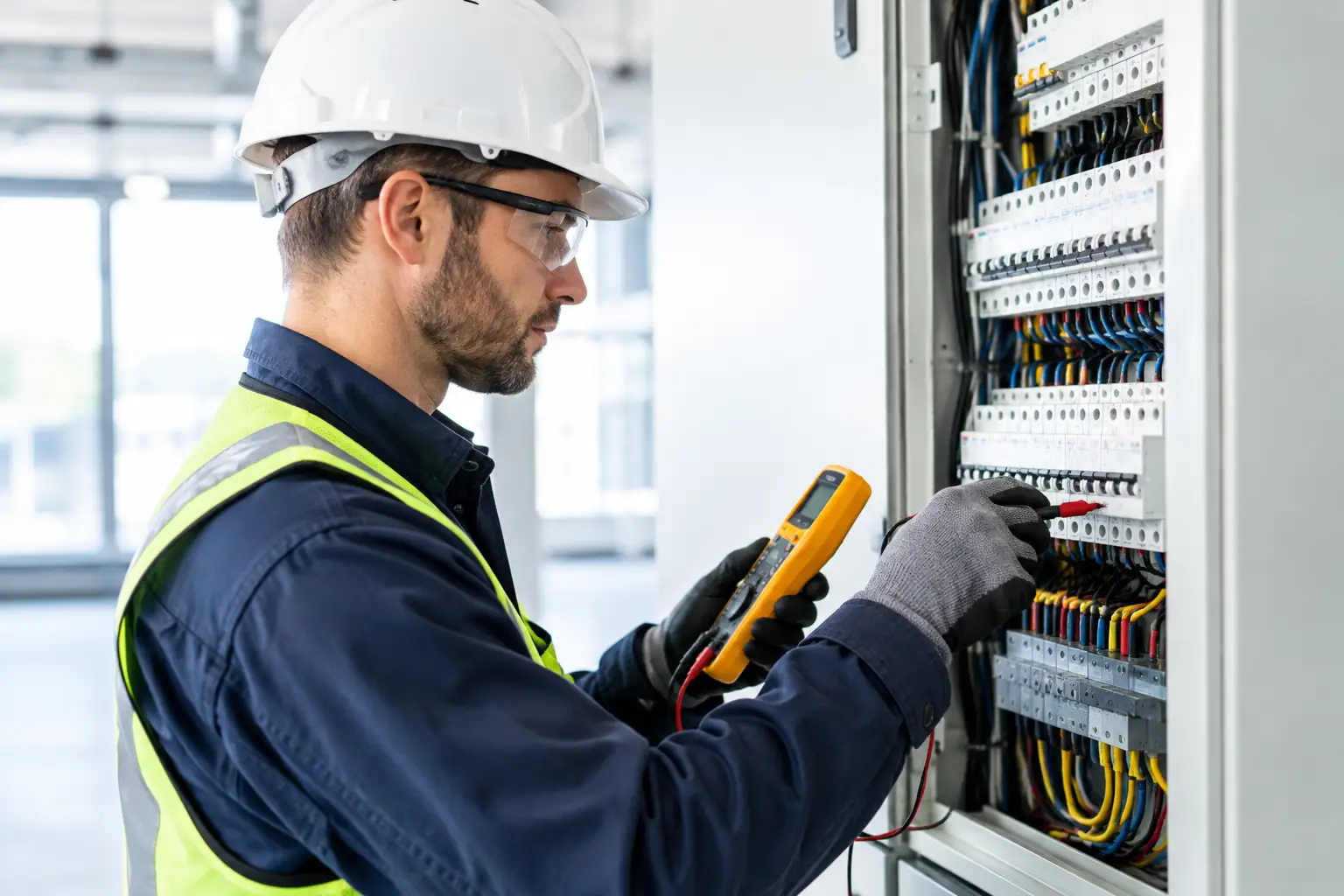
The main inspection for a commercial premises is commonly known as an Electrical Installation Condition Report, or EICR. A qualified electrician inspects and tests the fixed electrical installation, rather than just the items plugged into sockets. This includes consumer units or distribution boards, cables, sockets, switches, lighting circuits, earthing and bonding arrangements, and protective devices such as RCDs.
The purpose is to identify damage, deterioration, poor workmanship, overloading or changes that may make the installation unsafe. A visual inspection is part of the process, but testing is also required to check how circuits perform and whether protective measures will operate as intended.
Portable appliance testing, often called PAT testing, is separate. It relates to movable electrical equipment such as kettles, extension leads, desktop monitors, power tools and cleaning equipment. A business may need both fixed-wire testing and an appropriate programme for appliances, but they answer different questions.
Why testing matters for commercial properties
Under the Electricity at Work Regulations 1989, electrical systems must be maintained so far as is reasonably practicable to prevent danger. There is no single universal rule stating that every commercial building must be tested at exactly the same interval. The right frequency depends on the premises, its condition, the type of work carried out there and the level of risk.
A quiet office with a well-maintained installation does not face the same demands as a workshop, restaurant kitchen, warehouse or communal area in a managed building. Moisture, heat, heavy machinery, public access, frequent alterations and high levels of use can all justify more regular inspection.
Testing also protects the practical running of a property. Electrical faults can lead to downtime, damaged stock, disruption to tenants and costly emergency call-outs. A current report gives property managers a clearer picture of what needs attention, allowing remedial works to be planned alongside other maintenance rather than dealt with at the worst possible moment.
Insurance policies, lease agreements, client requirements and health and safety procedures may also set their own expectations. These should be checked alongside the legal duty to maintain safe electrical systems.
Who is responsible for arranging testing?
Responsibility can be shared or set out in a commercial lease, so it is worth checking the wording before work is booked. In many cases, the landlord is responsible for the base building and fixed installation, while a tenant may be responsible for electrical equipment or alterations within their demise.
However, responsibility on paper does not remove the need for sensible oversight. Managing agents, facilities teams and business owners should keep clear records of reports, certificates, remedial works and any changes to the installation. Where a tenant has fitted new equipment, added partition walls or changed the use of a space, the effect on existing circuits should be considered.
For multi-let buildings, communal corridors, plant rooms, external lighting and shared distribution equipment need particular attention. These areas can be missed when individual units are tested separately.
How a commercial electrical inspection works
A good inspection begins before the electrician arrives. The contractor should understand the property type, occupancy, operating hours, known issues and the location of distribution boards. Previous reports are useful, especially where older observations or recommendations have not yet been closed out.
Planning around the building’s use
Some tests require circuits to be isolated. In an office this may mean arranging work outside normal hours or notifying staff in advance. In a shop, surgery, care setting or food premises, the approach may need more detailed planning to avoid affecting critical equipment, refrigeration, security systems or trading activity.
The objective is not to avoid interruption at any cost. It is to manage it safely. A competent electrician should explain where power interruptions are likely, what needs to be shut down beforehand and whether testing can be phased across different areas.
Inspection and testing
The electrician will assess accessible parts of the installation for signs of overheating, damage, unsuitable equipment, missing labels, exposed live parts or alterations that do not appear properly installed. Testing then confirms the integrity of circuits, earthing arrangements and protective devices.
Not every cable can be inspected without opening walls, ceilings or floors. An EICR is based on the extent of the agreed inspection and what is reasonably accessible. If concealed defects are suspected, further investigation may be recommended. This is one reason why accurate records of previous works and alterations are valuable.
Receiving the report
After testing, the findings are recorded in an EICR. The report will normally state whether the installation is satisfactory or unsatisfactory at the time of inspection, along with any limitations that affected the scope of work.
Observations are commonly given the following codes:
- C1 identifies danger that requires immediate action.
- C2 identifies a potentially dangerous condition requiring urgent improvement.
- FI means further investigation is needed without delay.
- C3 is an improvement recommendation and does not, by itself, make a report unsatisfactory.
A report containing C1, C2 or FI observations is normally classed as unsatisfactory. C1 issues should be made safe immediately where possible. C2 and FI findings should be dealt with promptly, with the action recorded. Do not assume that an unsatisfactory report means the whole building must close. The right response depends on the nature and location of the issue, but leaving serious observations unresolved is not a sensible option.
Certificates are only useful when follow-up happens
The most common weakness in electrical compliance is not failing to arrange the test. It is allowing the report to sit in a folder while recommendations remain outstanding.
Create a clear action plan as soon as the report is received. Urgent defects should be prioritised, while improvement items can be considered as part of planned maintenance or refurbishment. If work is completed, keep the relevant electrical installation certificate or minor electrical installation works certificate with the EICR. This provides an evidence trail for insurers, auditors, prospective tenants and future contractors.
It is also worth reviewing whether recurring defects point to a wider issue. Repeated overloaded extension leads may indicate too few sockets. Persistent tripping may relate to unsuitable equipment, a damp environment or a circuit that no longer suits the way the space is used. Fixing the immediate fault matters, but identifying the cause can prevent repeat disruption.
Choosing the right testing interval
Many businesses use commonly accepted guidance as a starting point, but intervals should never be treated as a substitute for risk assessment. The recommended frequency may be shorter where there is public access, wet conditions, intensive use, older wiring, temporary installations or a history of faults.
A change in occupancy or use is also a sensible trigger for review. Converting an office into a treatment room, fitting out a retail unit, installing electric heating or adding workshop equipment can place very different demands on the electrical installation. Testing before occupation or following major alteration provides reassurance that the system remains suitable.
For managed portfolios, keeping a simple compliance schedule is often the most effective approach. Record the report date, next review date, any remedial actions and the responsible person. This avoids last-minute bookings and makes it easier to coordinate electrical work with void periods, refurbishment programmes and planned access.
Preparing for commercial electrical testing
A little preparation can reduce delays on the day. Ensure distribution boards, meter cupboards and plant areas are accessible, and arrange keys or permits where required. Tell occupants about possible interruptions, identify any sensitive equipment and provide the contractor with previous reports and circuit information where available.
It is equally important to use a competent electrician who is suitably qualified and able to provide clear documentation. The cheapest quotation is not always the lowest-cost option if the scope is unclear, access has not been considered or remedial works are later needed because the original inspection was incomplete.
For properties across East Sussex, Action Property Group can help coordinate electrical testing alongside repairs, fire safety work and refurbishment tasks, reducing the need to manage several contractors during a busy handover or compliance period.
A current report, prompt remedial work and organised records give you more than a compliance document. They give you a safer property and fewer surprises when a tenant moves in, an inspection is due or a fault occurs.




No Comments