
Best Property Security Upgrades for Rentals
A vacant property with a damaged lock, an obscured side gate and no external lighting presents an opportunity before anyone has even entered the building. The best property security upgrades are rarely about adding the most technology. They start by closing obvious weaknesses, protecting safe access and making the property harder to target without making day-to-day occupation more difficult.
For landlords, agents and businesses, security needs to work alongside maintenance, fire safety and tenancy turnover. A useful upgrade is one that reduces risk, stands up to regular use and can be checked easily between tenancies. It should also be properly fitted. A high-quality lock or camera will not compensate for a loose frame, a poorly adjusted door closer or an unmanaged set of keys.
Start with a practical security inspection
Walk around the property as somebody looking for the easiest route in. Check front, rear and side doors, accessible windows, gates, communal entrances, bin stores, garages and outbuildings. Pay attention to areas that cannot be seen from the road or neighbouring properties. These are often where poor lighting, damaged fencing and tired locks create the greatest risk.
Inside, inspect the condition of door frames, letterboxes, hinges, window catches and any previous repair work. A door that has dropped in its frame may not lock correctly. Timber weakened by water ingress can make a secure lock ineffective. Security and general maintenance are closely connected, so defects should be repaired before new hardware is installed.
For managed portfolios, record the findings property by property. This helps distinguish urgent works from sensible planned improvements and gives a clear record of what was checked at handover. It also avoids spending money on a visible device while overlooking a basic fault at the point of entry.
Best property security upgrades to prioritise
Upgrade external doors, frames and locks
External doors are the first priority. A solid, correctly hung door with a sound frame and appropriate locking is more valuable than several secondary upgrades. Check that the frame is firmly fixed, hinges are secure and the keep plate aligns properly with the lock. Where a door is warped, split or repeatedly sticking, adjustment or replacement may be needed before considering new locks.
For timber or composite doors, the right lock specification depends on the door type and the insurance requirements for the property. On uPVC and composite doors with multipoint locking, the cylinder is often the vulnerable component. A suitable anti-snap, security-rated cylinder can be a worthwhile improvement, but it must be compatible with the existing mechanism and installed correctly.
Lock changes should be routine at the start of a new tenancy unless there is certainty that every copy of the outgoing keys has been returned. This applies to front doors, rear doors, garages, sheds, meter cupboards and shared access points where appropriate. Keep a controlled key record, particularly for blocks, commercial premises and properties with maintenance contractors attending regularly.
Do not compromise fire safety for the sake of security. Fire doors in communal areas and commercial settings must close and latch correctly, and escape routes must remain usable from the inside. Fitting the wrong lock, drilling into a certified fire door without proper consideration or wedging a self-closing door open can create a serious compliance issue.
Improve external lighting without causing nuisance
Good external lighting makes entrances, paths and side access routes easier to use safely after dark. It also removes the cover that poorly lit areas can provide. Motion-activated lighting is a practical choice for side passages, rear gardens, bin areas and driveway approaches, while a low-level dusk-to-dawn light may suit a main entrance or communal path.
Positioning matters. A light that shines directly into a neighbour’s window, creates glare for drivers or activates constantly because of passing pedestrians will quickly become a nuisance. Select durable fittings suitable for outdoor use, place them where they cover the approach rather than the sky, and test them after installation.
Lighting should not be treated as a substitute for secure doors and locks. It is most effective as part of a wider approach that makes the property well maintained and visibly occupied.
Secure accessible windows and secondary entry points
Ground-floor windows, first-floor windows near flat roofs and windows beside gates or extensions deserve close attention. Check that locks engage properly and that keys are available when needed, particularly where windows form part of an emergency escape arrangement. Broken restrictors, loose catches and cracked frames should be repaired promptly.
Sheds, garages and side gates are frequently overlooked, despite holding tools, bicycles or equipment that can be used to cause further damage. Use hasps, padlocks and fittings designed for the purpose rather than lightweight hardware intended only to keep a door closed. Gate hinges should be protected where they are accessible from outside, and damaged fencing should be repaired before it becomes an easy access point.
For vacant properties, remove ladders, unsecured tools and loose materials from the site. These can give an intruder both access and the means to force entry.
Use controlled access for shared buildings
A communal front door is only as secure as the system used to manage access. Traditional keys can work well for a small, stable building, but they become difficult to control when residents, cleaners, contractors and former occupants may all have copies. Key fobs, coded access or video entry systems can offer better control in the right setting.
The trade-off is management. Codes need changing when they are widely shared, lost fobs must be removed promptly, and entry systems need an agreed process for adding new residents. A system that nobody administers becomes less secure over time. For blocks and commercial premises, agree who has authority to issue credentials and keep that responsibility clear.
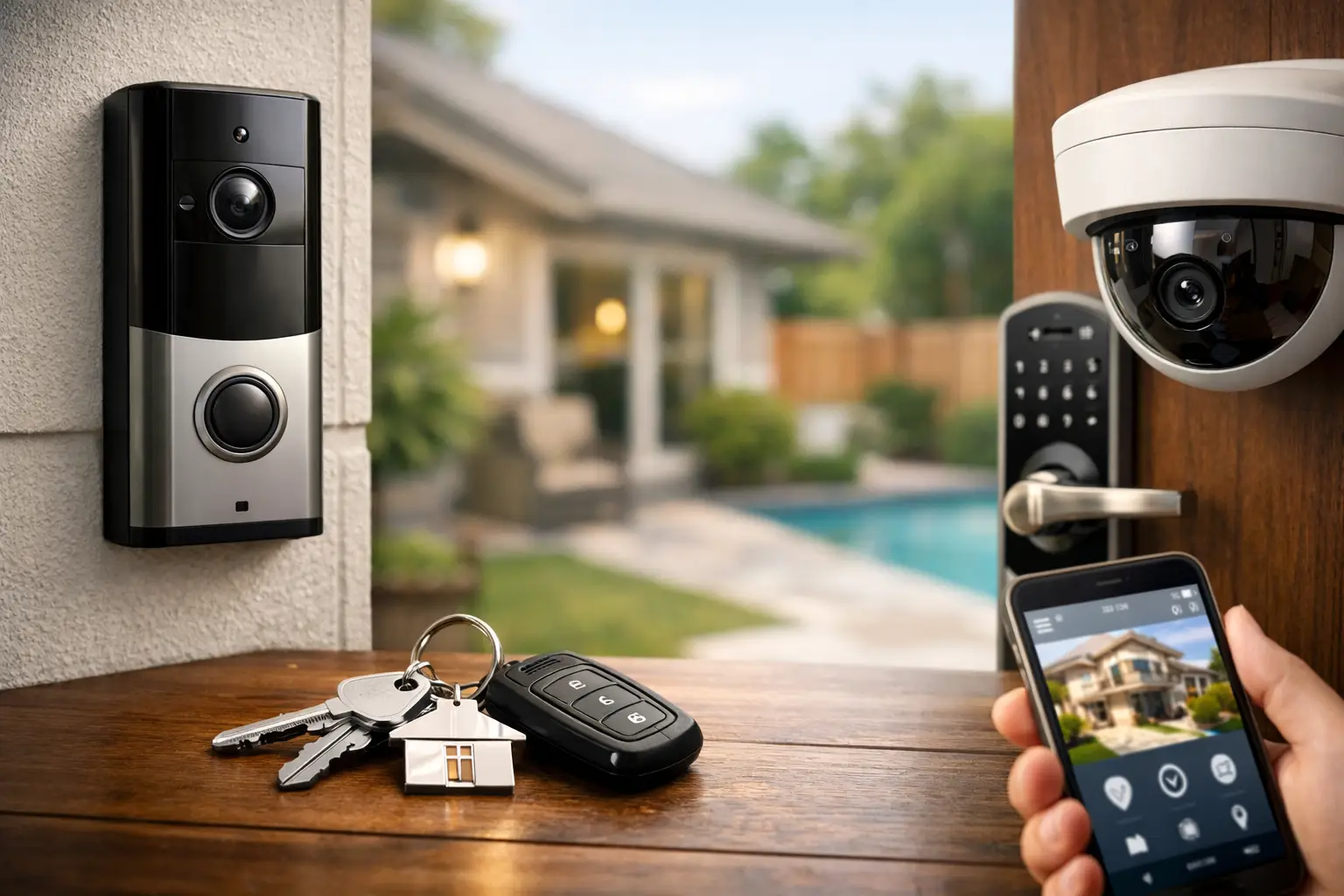
Video intercoms can help residents verify callers before granting access, especially where the main entrance is not visible from individual flats. Choose equipment that is straightforward to operate. If visitors and delivery drivers cannot use it, residents may bypass the system by propping the entrance open.
Consider alarms and CCTV carefully
Alarms and CCTV can be useful where the property faces a higher risk, has repeated incidents or contains valuable equipment. They are not automatically the right first purchase for every rental home. An alarm requires reliable set-up, battery checks, response arrangements and clear instructions for tenants. A poorly maintained system creates false activations and is often ignored.
CCTV should cover a genuine security need, such as a commercial yard, a shared entrance or a vulnerable external area. Camera positions should be proportionate and should not unnecessarily capture neighbours’ private spaces. Landlords and property managers must also consider privacy, signage and data protection responsibilities before installation, particularly in communal areas.
Visible cameras may deter opportunistic behaviour, but they should support rather than replace basic physical security. A camera recording a forced door is less useful than a door that resists forced entry in the first place.
Match security to occupancy and property risk
A family home, a student let, an empty refurbishment project and a commercial unit do not need identical measures. The right level of investment depends on location, layout, previous incidents, tenant profile, building use and how long the property will be vacant.
During a short void, priority should be given to lock changes, boarding or repairing damaged access points, clearing post, maintaining external appearance and making sure the property is visited regularly. Long-term empty properties may need additional measures such as timed lighting, alarm monitoring, stronger temporary protection or more frequent inspections. Insurers may set specific conditions for unoccupied buildings, so check the policy before leaving a property vacant for an extended period.
For occupied rentals, make security easy for tenants to use. Provide clear instructions for locks, alarms, fobs and window restrictors at move-in. Ask tenants to report faults quickly rather than waiting for a routine inspection. A broken communal door closer or faulty rear lock is much easier to resolve before it becomes an incident.
Install properly and keep the records
Security work should leave the property safer, not create fresh maintenance or compliance issues. Use appropriate fixings, test every lock and closer, and make sure doors open, close and latch as intended. Electrical work for lighting, access systems, alarms and cameras should be carried out safely and tested where required.
Keep a record of lock changes, keys issued, access credentials, alarm handover details and maintenance dates. This is particularly useful for letting agents and landlords managing several properties, as it gives a clear audit trail at each tenancy change. It also makes reactive work faster when a key is lost, a fob fails or a lock needs replacing.
Action Property Group supports landlords, agents and property owners across East Sussex with practical security repairs, lock changes, fire door work and wider property maintenance. The most effective approach is usually a planned one: deal with weak entry points first, keep systems simple enough to manage, and review security at every handover so the property remains safe, compliant and ready for occupation.




No Comments