
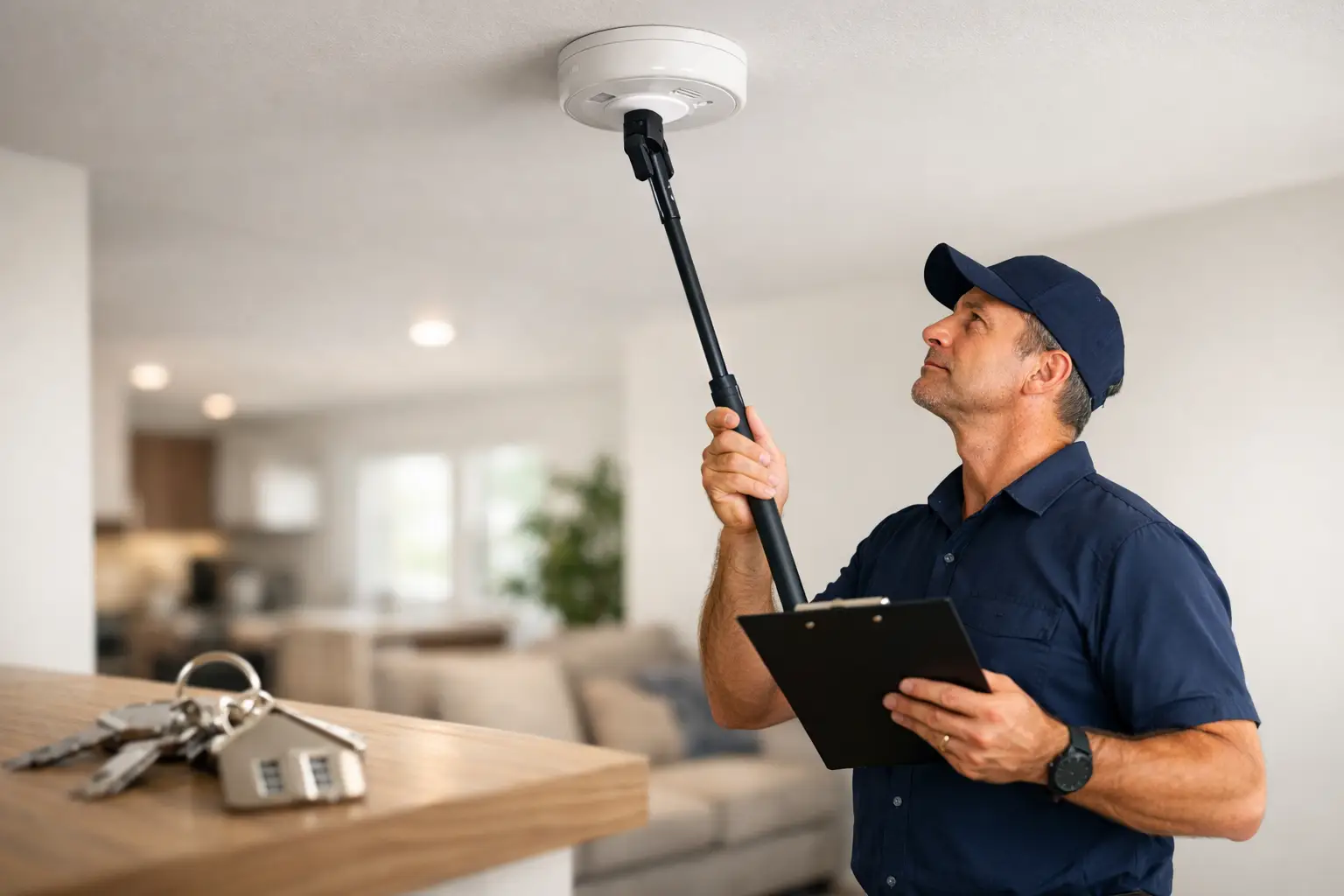
When Are Smoke Alarms Tested in Rental Homes?
A smoke alarm that has not been tested is not a safety measure – it is an assumption. For landlords, letting agents and property managers, knowing when are smoke alarms tested is part of keeping homes safe, meeting legal duties and avoiding problems at inspection, renewal or handover.
The short answer is that smoke alarms should be tested at the start of every new tenancy, checked regularly during occupation, and included in a planned maintenance programme. The exact schedule depends on the type of property, alarm system and any licensing conditions, so a simple approach is not always enough.
When are smoke alarms tested in rented properties?
In England, landlords must ensure that required smoke and carbon monoxide alarms are in proper working order on the first day of a new tenancy. This is a legal starting point, not a one-off task to forget once keys have been handed over.
For most rented homes, the landlord must provide at least one smoke alarm on every storey used as living accommodation. Carbon monoxide alarms are also required in rooms used as living accommodation that contain a fixed combustion appliance, other than a gas cooker. Requirements can be different or more extensive where an HMO licence, local authority condition, fire risk assessment or purpose-built fire alarm system applies.
Once the tenancy is underway, tenants should test alarms regularly and report faults promptly. Landlords remain responsible for arranging repairs or replacement when an issue is reported. Clear records matter: a signed check-in inventory, alarm test record and maintenance log make it far easier to show that the property was properly prepared.
A practical testing schedule for landlords and agents
A reliable routine protects tenants and reduces last-minute compliance work. It also stops small issues, such as a flat battery or painted-over detector, becoming a problem at the next inspection.
At the start of each tenancy
Test every smoke and carbon monoxide alarm on the day the tenancy begins, ideally as part of the final pre-tenancy inspection. Press the test button, confirm that the alarm sounds clearly, check for visible damage and make sure the unit is securely fixed in the correct position.
Record the result on the inventory or handover document. It is sensible to show the tenant where each alarm is located, explain how to test it and ask them to report any fault immediately. This takes only a few minutes but sets clear expectations from day one.
During routine property inspections
Many managing agents and landlords carry out inspections every three to six months. Testing alarms during these visits is good practice, provided access has been arranged correctly and the tenant has been given appropriate notice.
This is also the time to check for common issues. Alarms may be removed after nuisance activations, covered during decorating, contaminated by dust or left with a low-battery warning. A detector can look present and tidy while no longer operating as intended.
Regular checks by tenants
Tenants should be encouraged to test alarms monthly, or in line with the manufacturer’s instructions. A brief reminder in a welcome pack, maintenance guide or seasonal property message can prevent uncertainty about who should do what.
The tenant does not need to dismantle or service the alarm. Their role is to press the test button, listen for the warning signal and report any failure, damage or repeated low-battery alert. They should never ignore a warning chirp or remove a battery to stop it.
At void, refurbishment and handover stages
Vacant properties need particular attention. Smoke alarms can be affected by decorating dust, battery depletion, electrical works, damp, accidental damage and long periods without routine checks. Test the alarms when a property becomes empty, again after refurbishment or cleaning, and once more before new tenants move in.
If ceilings have been replastered, painted or repaired, inspect detector heads carefully. Dust and paint can affect performance, while a contractor may need to remove a unit temporarily to complete works. Every device should be back in place, clean and functioning before the property is released for occupation.
Different alarm systems need different checks
Not every property has the same set-up. A small flat may have standalone, battery-powered detectors, while a larger HMO or commercial premises may have a panel-controlled fire alarm system with manual call points, detectors and emergency lighting. The testing and servicing approach changes accordingly.
For domestic smoke alarms, regular button tests and checks against the manufacturer’s guidance are generally appropriate. Alarms with sealed, long-life batteries still need testing. A ten-year battery reduces the need for battery changes; it does not guarantee that the sensor, sounder or electronics will work indefinitely.
Mains-powered alarms should also be tested using the button. Do not assume they are working because they are hardwired. If an alarm fails to sound, has a persistent fault light or repeatedly chirps, it should be investigated rather than reset and forgotten.
Communal or commercial fire alarm systems require a more formal regime. Weekly user tests are commonly used to confirm that the system activates and is audible, while periodic inspection and servicing should be carried out by a competent fire alarm contractor in line with the system design, risk assessment and applicable standards. In many cases, professional servicing is scheduled at least every six months, but the right interval depends on the premises and system.
What landlords should record
Testing is only useful if faults are acted on, and records help demonstrate that this has happened. For managed portfolios, a consistent process is more dependable than relying on individual memory.
Keep a simple record of the property address, date of test, alarm locations, results, any defects found and the action taken. Include the name of the person completing the check and retain invoices or certificates for replacements and servicing.
A log should also identify the alarm type and installation date where known. Smoke alarms have a limited service life, often around ten years, although the manufacturer’s instructions take priority. A unit that still sounds when tested may nevertheless be at the end of its recommended replacement period.
Common mistakes that create compliance problems
The most frequent failure is treating the test button as the entire inspection. A sounding alarm confirms part of the unit is operational, but it does not correct poor placement, expired equipment, contamination or a missing detector elsewhere in the home.
Another mistake is replacing like for like without considering whether the existing arrangement meets current requirements. A property altered to create a loft room, additional bedroom or different layout may need a fresh review of alarm coverage. HMOs and converted buildings can have additional fire safety considerations that go beyond the minimum rules for a standard tenancy.
It is also unwise to leave responsibility vague. Tenants should test and report issues during the tenancy, but landlords and agents should have a clear route for responding. A report of a faulty alarm deserves prompt action, particularly where the property relies on it for early warning.
A sensible approach when an alarm fails
If a smoke alarm does not sound during a test, first check the manufacturer’s guidance and whether the unit has a replaceable battery. Where safe and appropriate, replace the battery and retest. If it still fails, or if the unit is old, damaged, contaminated or sealed, arrange a replacement without delay.
For mains-powered alarms, repeated faults may point to a wiring issue, failed interconnection or defective unit. A qualified electrician should investigate rather than relying on temporary fixes. In a managed block, do not interfere with communal fire safety equipment without the responsible person’s approval and the correct competent contractor.
Where a property is about to be let and an alarm cannot be made operational immediately, the right response is to resolve the fault before occupation. Compliance is not an item to carry forward to the next maintenance visit.
For landlords and agents across East Sussex, a planned inspection and maintenance process keeps alarm checks from becoming a rushed task between tenancies. Action Property Group can support property readiness work alongside electrical repairs, fire safety compliance and refurbishment, helping reduce the number of contractors involved.
A tested alarm is a small detail with a serious purpose. Build the checks into your tenancy, inspection and void routines, keep clear records, and deal with faults as soon as they are identified.




No Comments