
Your Guide to Emergency Property Repairs
A burst pipe running through a ceiling, a failed lock after a break-in, or water reaching an electrical socket can turn a normal day into a serious property incident within minutes. This guide to emergency property repairs is designed to help landlords, letting agents, homeowners and commercial property managers make sound decisions under pressure: protect people first, prevent further damage where safe, and bring in the right help without delay.
What makes a repair an emergency?
An emergency repair is not simply inconvenient or likely to upset an occupier. It is a fault that creates an immediate risk to people, property security, the building itself, or essential services. The priority is to stabilise the situation, not to carry out a perfect permanent repair at the first visit.
A major water leak, loss of electrical safety, suspected gas leak, fire damage, insecure external doors or windows, sewage back-up and sudden structural movement can all require urgent action. A dripping tap, a cosmetic crack or a faulty kitchen cupboard may need attention, but they would not normally justify an emergency call-out unless they are causing a wider safety issue.
For landlords and agents, the distinction matters. It helps teams respond fairly and quickly, gives tenants clear expectations, and avoids delays caused by trying to diagnose a dangerous fault remotely. When in doubt, assess the risk rather than the inconvenience.
The first 30 minutes: make the property safe
Protect people before the building
If there is a fire, serious injury, a suspected gas leak or an immediate threat to life, contact the emergency services first. Do not ask an occupier to investigate smoke, a burning smell, damaged wiring or a potentially unstable ceiling. Evacuate the area where necessary and keep people away until it is safe.
For a suspected gas leak, avoid operating electrical switches, using naked flames or starting vehicles nearby. Open doors and windows if this can be done safely, leave the property, and contact the National Gas Emergency Service on 0800 111 999. A qualified Gas Safe engineer should deal with any appliance or pipework repair that follows.
Isolate the source, only if it is safe
Stopping the cause can save thousands of pounds in secondary damage. If water is escaping and there is no electrical risk, turn off the internal stopcock or local isolation valve. Occupiers should know where this is located, particularly in rented homes and vacant properties.
If water is close to sockets, consumer units or electrical equipment, do not touch the water or attempt to isolate electrics while standing in a wet area. Keep clear and arrange a competent electrician. Similarly, do not force a damaged fire door shut, remove a lock from a communal entrance, or interfere with electrical equipment that has been affected by fire or flooding.
Record the condition without delaying action
Photographs and short videos taken from a safe distance can support insurance claims, contractor instructions and later discussions about cause. Record the time the fault was discovered, which areas are affected and what immediate steps were taken. However, evidence gathering must never delay evacuation, isolation or an urgent call-out.
For managed properties, a simple incident log is useful. It should identify the occupier or reporter, the property address, the apparent issue, the action taken and the contractor attending. This gives everyone involved one clear account of events.
A guide to emergency property repairs by risk
Water ingress and burst pipes
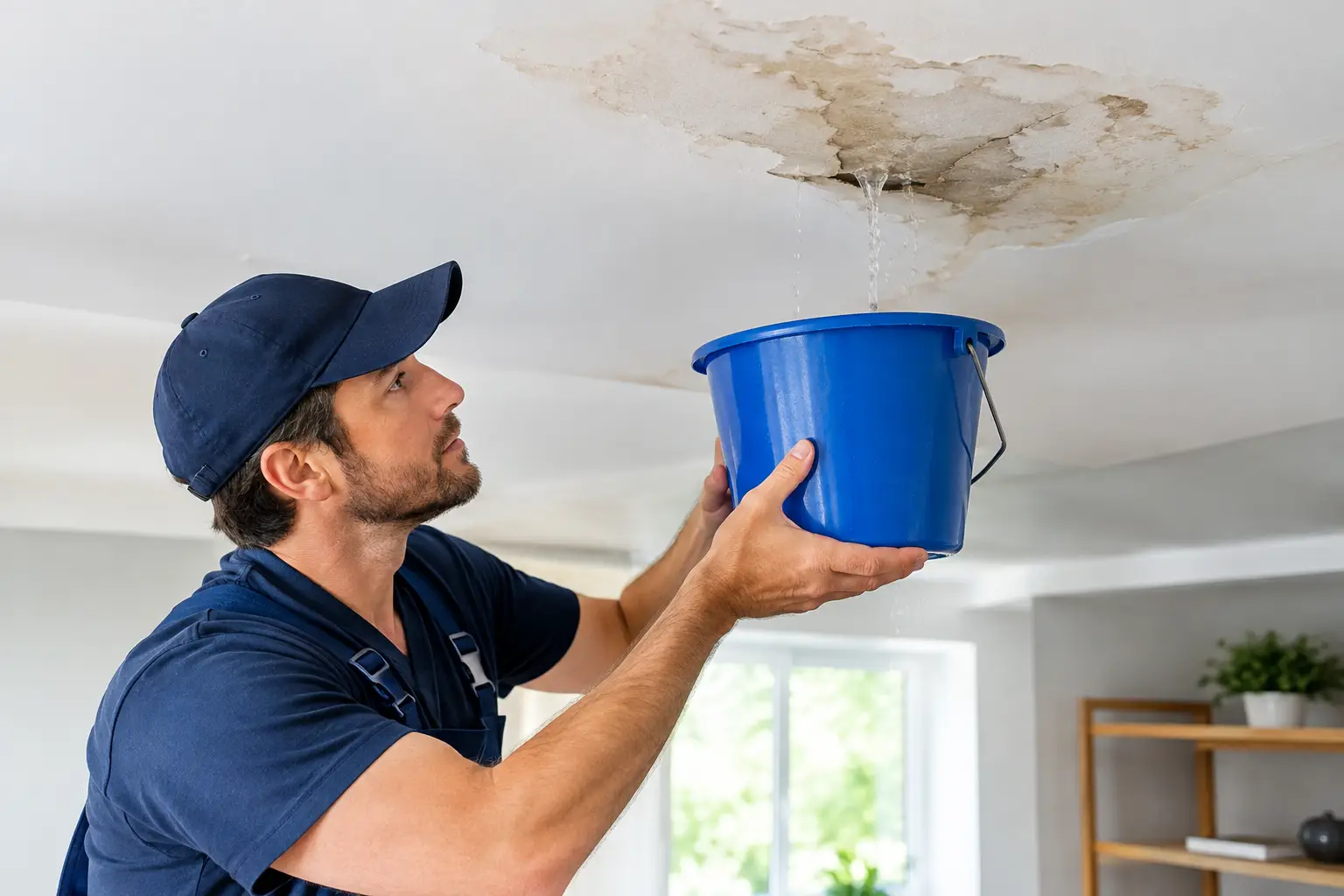
Water is one of the most common urgent repair issues because it travels quickly through floors, walls and neighbouring flats. Once the supply is isolated, remove belongings from the affected area where practical and place containers under minor residual drips. Avoid puncturing bulging ceilings. They may contain a significant volume of water and can collapse unpredictably.
A plumber can repair the immediate leak, but that may not be the end of the job. Soaked plasterboard, insulation, flooring and timber may need assessment, drying and repair. Where water has reached electrics, an electrician should confirm that circuits and equipment are safe before power is restored. Fast action limits damage, but rushing to redecorate before materials are dry can lead to staining, mould and repeat work.
Electrical faults, fire and smoke damage
Sparking sockets, repeated tripping, exposed live parts, burning smells and water-damaged electrical installations need professional attention. Do not keep resetting a circuit breaker to see whether it holds. A protective device that trips is often responding to a fault.
After a fire or smoke incident, the property may require more than cleaning and decoration. Fire doors, escape routes, electrical systems, locks and alarms may all need checking before the building is occupied again. In communal or commercial settings, this can have compliance implications as well as practical ones. The correct repair scope depends on the incident, but the property should not return to normal use until safety-critical items have been assessed.
Security failures, locks and fire doors
A broken external lock, damaged door frame or smashed ground-floor window can leave occupants and possessions exposed. Arrange temporary boarding or secure locking promptly, then assess whether the door, frame, glazing or access-control system needs a full repair.
Fire doors need particular care. They are not ordinary internal doors and should not be altered with unsuitable locks, closers, gaps or panels. If a fire door is damaged, failing to close or has been forced open, a competent repair is needed to preserve its fire-resisting performance. For landlords and managers, this is a safety issue that should be recorded and addressed promptly.
Structural damage, drainage and sanitation
Large cracks that appear suddenly, sagging ceilings, loose roof materials after severe weather, or damage following a vehicle impact should be treated cautiously. Keep people away from the affected area and obtain professional assessment. Do not assume a crack is cosmetic if it has appeared quickly or is accompanied by movement, water ingress or doors that no longer close properly.
Blocked drains become urgent when sewage is backing up into the property, toilets cannot be used, or contamination is spreading. Restrict access, use appropriate hygiene precautions and arrange specialist attendance. Cleaning alone is not enough: the blockage or defect must be resolved before the area can be properly sanitised and returned to use.
Choosing the right repair response
An emergency contractor should be able to explain what they can make safe immediately, what needs further investigation, and what work is required to complete the repair. This is especially valuable when an incident crosses trade boundaries. A leak may need plumbing, electrical testing, plastering, cleaning and redecoration. A forced door may need security work, lock replacement and fire-door assessment.
Ask for clear communication on access arrangements, temporary measures, likely disruption and any follow-on work. A cheap temporary fix can be appropriate at midnight, but it should not be mistaken for a complete solution. The right approach balances speed with workmanship, safety and the condition required for reoccupation, inspection or handover.
For property portfolios, it also helps to have an agreed reporting route and authorised spend level before an emergency occurs. Tenants and site staff should know who to contact, while managers should know which information the contractor needs to mobilise quickly.
After the immediate danger has passed
Once the property is stable, check the wider effect of the incident. Confirm whether neighbouring flats, common parts, electrical circuits, fire safety measures, heating, drainage or security have been affected. Tell insurers or managing agents when required, and retain invoices, photographs and reports.
Then move from emergency attendance to a proper reinstatement plan. This may include moisture checks, electrical testing, replacement locks, plaster repairs, cleaning, painting and decorating, or making a void property ready for its next occupier. The best result is not simply a fault that has stopped leaking or closing. It is a safe, secure and presentable property with the relevant work properly documented.
Reduce the chance of the next call-out
Many emergencies start as small, ignored defects. Routine inspections can identify stiff locks, loose roof tiles, poor sealant, slow leaks, damaged extractor fans, deteriorating fire doors and overloaded electrical accessories before they become urgent. Vacant homes need particular attention during cold weather, when frozen pipework and unnoticed water ingress can cause extensive damage.
Keep shut-off points labelled, maintain clear contractor records and encourage occupiers to report changes early. A dependable maintenance plan will not prevent every incident, but it gives you a faster, calmer response when one occurs.
When a property needs urgent attention, the aim is simple: keep people safe first, protect the asset next, and make sure the final repair leaves the building ready for normal use rather than merely patched up for the day.




No Comments