
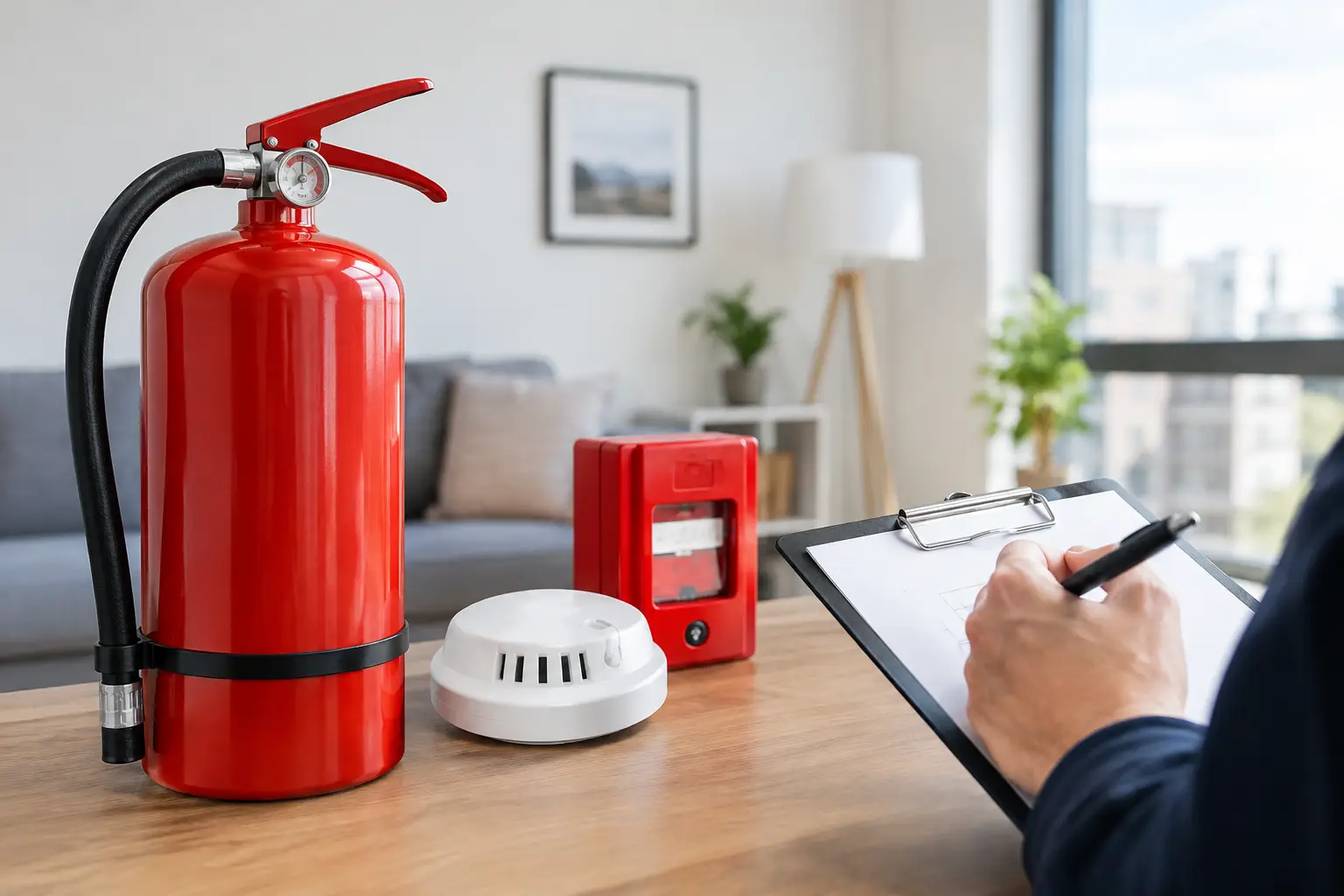
8 Best Fire Safety Upgrades for Rental Properties
A property can look ready for a new tenant while still carrying fire risks behind a painted door, above a ceiling tile or within an outdated alarm system. The best fire safety upgrades are the ones that address how a fire could start, spread and be detected, while giving occupants a clear route to safety.
For landlords, agents and property managers, the priority is not adding equipment for the sake of it. It is making sensible improvements that suit the building, meet relevant duties and stand up to inspection. A clear survey of the property should come first, particularly after a change of use, refurbishment, void period or recurring maintenance issue.
Best fire safety upgrades to prioritise
1. Replace damaged or non-compliant fire doors
Fire doors are often the most valuable upgrade in blocks of flats, HMOs, commercial premises and properties with protected escape routes. They are designed to hold back fire and smoke for a set period, but only if the complete door assembly is in good working order.
A fire door with gaps around the frame, missing intumescent strips, damaged seals, unsuitable hinges or a faulty self-closing device may not perform as intended. Wedging doors open is another common issue that removes the protection altogether. Upgrading a door is not simply a case of fitting a heavier leaf. The frame, glazing, ironmongery, seals and closer all need to be compatible and correctly installed.
In rental properties, attention should also be given to flat entrance doors where they form part of the fire strategy. The right specification depends on the building and its fire risk assessment, so avoid a one-size-fits-all approach.
2. Upgrade smoke and heat alarms
Early warning saves time, and time is critical during a fire. In England, rented homes must have at least one smoke alarm on every storey used as living accommodation and a carbon monoxide alarm in rooms with a fixed combustion appliance, excluding gas cookers. Requirements can change, and individual properties may need more than the legal minimum.
Mains-powered, interlinked alarms with battery back-up are often a practical upgrade during refurbishment or electrical works. When one alarm activates, the others sound too, which is especially useful in larger homes, HMOs and layouts where bedrooms are distant from the kitchen or living areas.
Alarm type and location matter. Heat alarms are normally more suitable for kitchens, where steam and cooking fumes can cause nuisance activation. Smoke alarms are generally used in circulation spaces and living areas. Alarms should be tested at the appropriate intervals, with faults dealt with promptly rather than left for the next planned visit.
3. Improve compartmentation and seal hidden gaps
Fire does not only travel through rooms and corridors. It can move through unsealed gaps around pipes, cables, ductwork and service risers, often out of sight behind cupboards or above suspended ceilings.
Compartmentation work restores the barriers that divide a building into separate fire-resisting sections. This may involve applying suitable fire-stopping materials around penetrations, repairing damaged walls or ceilings, and closing voids created by previous electrical, plumbing or data installations.
This work is particularly relevant after alterations. A new extractor, cable run or pipe installation can compromise a fire-resisting wall if the opening is not correctly sealed afterwards. It is a detail easily missed when several trades attend at different times, which is why coordinated maintenance work has real value.
4. Make escape routes reliable and easy to use
An escape route is only useful if people can identify it and move through it without delay. Corridors, stairways and final exits should be kept clear of stored items, bicycles, bins and furniture. Door locks need to allow safe escape without a key where required, while still providing appropriate security from outside.
In shared or commercial buildings, emergency lighting may be needed to keep routes visible during a power failure. Illuminated exit signs can also help where the route is not obvious. These systems require routine testing and maintenance, not just installation.
For a house let to one household, the measures may be simpler. For a converted building, shop, office or property with common parts, the standard can be considerably higher. The building layout, occupancy and fire risk assessment should guide the decision.
5. Address electrical risks before they become ignition sources
Electrical faults remain a significant cause of fires in homes and workplaces. A valid Electrical Installation Condition Report helps identify deterioration, overloaded circuits, poor previous work and defects that need remedial action. Portable appliance checks may also be relevant where a landlord or business supplies equipment.
Useful upgrades can include replacing damaged accessories, improving consumer unit protection where recommended, correcting unsafe wiring and ensuring extraction systems are properly maintained. Do not overlook tenant reports of tripping circuits, burning smells, hot sockets or flickering lights. These are maintenance issues that require investigation, not temporary workarounds.
During a void refurbishment, electrical improvements are usually less disruptive and more cost-effective than trying to complete them after occupation.
6. Protect higher-risk kitchen areas
Kitchens combine heat, electrical appliances, cooking oils and regular human activity. In domestic properties, a correctly positioned heat alarm, sound electrical installation and clean extraction can make a meaningful difference. In communal kitchens or commercial settings, further controls may be appropriate.
Where grease-producing cooking is part of the operation, specialist suppression systems and planned extraction cleaning may be necessary. A domestic extinguisher is not a replacement for a proper fire strategy, and asking an untrained person to tackle a growing fire can put them at greater risk. The first instruction should always be to get out, raise the alarm and call the fire and rescue service.
7. Add appropriate fire safety signage and equipment
Signage is most useful in premises with visitors, staff, shared routes or less obvious exits. Fire action notices, escape-route signs, fire door reminders and extinguisher identification can reduce confusion when seconds matter. Signs should be current, legible and positioned where they can be seen.
Extinguishers, fire blankets and other first-aid firefighting equipment may be suitable in commercial premises and certain shared settings. Their selection, location and servicing should follow the risk assessment. Too much equipment in the wrong place can create false confidence; too little planning can leave staff unsure what to do.
8. Keep records and create a maintenance plan
The most effective fire safety upgrade can fail if it is not inspected, tested and recorded. Keep evidence of alarm tests, emergency-lighting checks, fire door inspections, electrical reports, servicing and remedial works. Clear records support compliance, help manage contractors and make handovers between landlords, agents and managing teams far smoother.
A planned schedule also prevents minor defects becoming urgent problems. A closer that begins to fail, a seal peeling away from a door frame or a recurring alarm fault is cheaper to address early than after an inspection identifies a wider issue.
Choosing upgrades that fit the property
The right order of work depends on the building. A single-family rental house may benefit most from dependable alarms, electrical remedials and sensible kitchen controls. A block, HMO or commercial unit is more likely to require closer attention to fire doors, common escape routes, emergency lighting and compartmentation.
Start with the highest risks and the items that affect life safety. Then coordinate the work with planned refurbishment, void turnaround or electrical testing where possible. This reduces repeat visits, limits disruption and avoids the common problem of one trade undoing another’s completed work.
For property owners across East Sussex, a joined-up maintenance contractor can help bring fire doors, electrical work, repairs and redecoration into one practical programme. The aim is not to over-specify a property. It is to make it safer, compliant and ready for occupation without unnecessary delay.
The best next step is a clear assessment of what is already in place, what is damaged or overdue, and which improvements will have the greatest impact before the next tenant, inspection or handover.




No Comments