
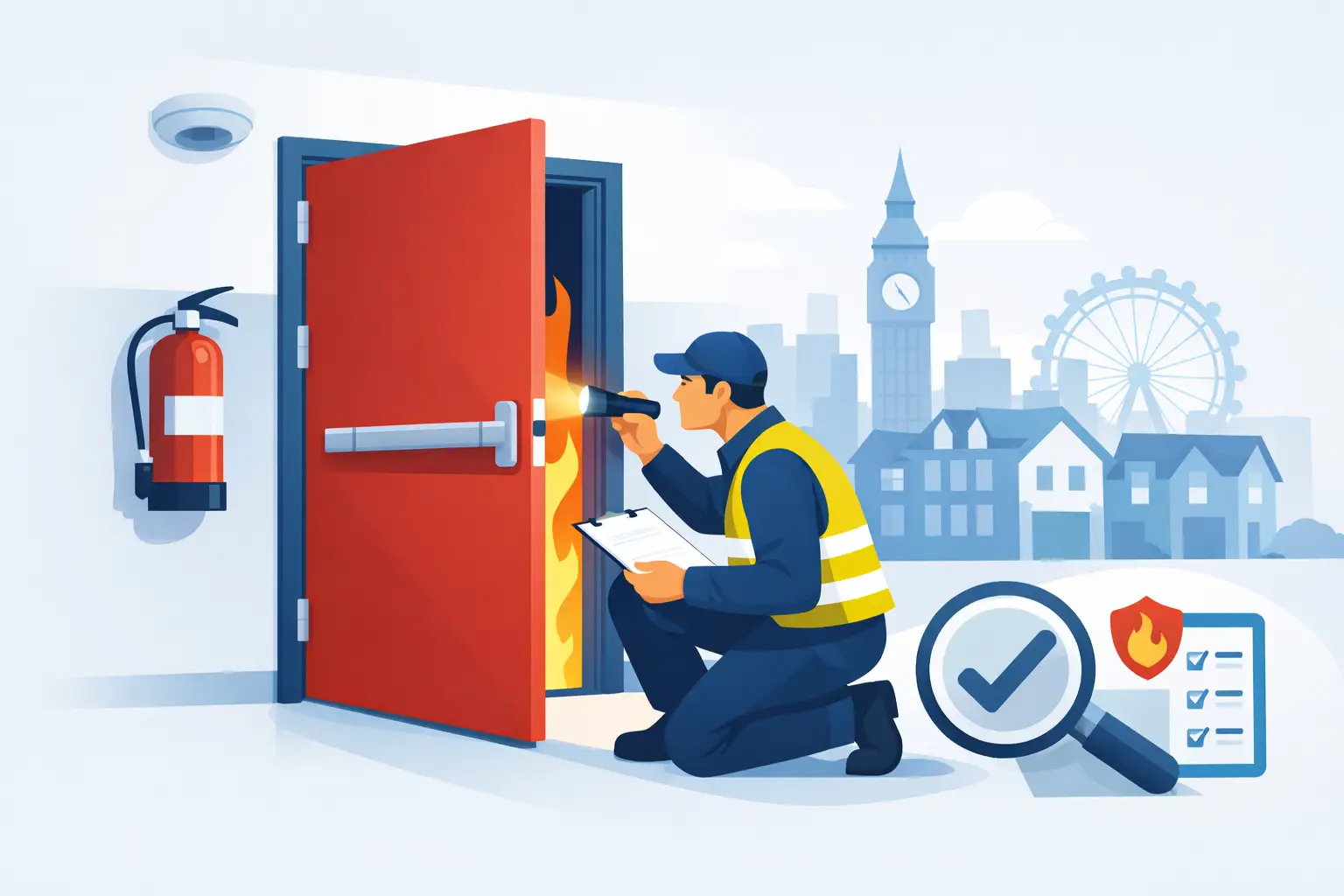
Fire Door Inspection Requirements for UK Properties
A fire door that looks sound can still fail when it is needed most. A damaged seal, a closer that does not fully shut, or a gap around the frame can allow smoke and fire to pass through far sooner than intended. For landlords, managing agents and business owners, understanding fire door inspection requirements is a practical part of keeping a building safe, compliant and ready for occupation.
Fire doors are not simply heavier internal doors. They are tested door sets designed to hold back fire and smoke for a stated period, commonly 30 or 60 minutes. That performance depends on the door, frame, hinges, seals, closer, glazing and ironmongery working together. Altering or neglecting one part can compromise the whole assembly.
Who is responsible for fire door inspections?
In most non-domestic premises and the common parts of residential buildings, the responsible person under the Regulatory Reform (Fire Safety) Order 2005 must take general fire precautions. This includes ensuring fire doors are maintained in an efficient state, in efficient working order and in good repair.
Responsibility may sit with a landlord, freeholder, managing agent, employer or another person with control of the premises. In practice, it should be clear who arranges inspections, authorises repairs and keeps the records. Assumptions create gaps, especially where several parties manage different parts of a building.
For purpose-built blocks of flats, fire doors in communal areas and flat entrance doors may also form part of the building’s fire safety arrangements. The Fire Safety (England) Regulations 2022 set specific checks for certain multi-occupied residential buildings in England. Requirements vary according to the building type and height, so a site-specific fire risk assessment remains essential.
A tenant is not normally responsible for proving that a landlord’s fire doors meet the required standard. However, residents and staff should be encouraged to report damage, missing closers, wedged-open doors and faulty locks promptly.
What fire door inspection requirements cover
A competent inspection looks beyond whether a door opens and closes. The aim is to identify defects that could prevent the door from containing fire or smoke, or stop people escaping safely.
The door leaf and frame
Inspectors check that the door leaf and frame are in good condition, with no excessive warping, delamination, holes, deep damage or unauthorised alterations. The door must sit correctly in the frame and should not bind on the floor, carpet or threshold.
Gaps matter. They should be consistent and within the manufacturer’s tolerances, commonly around 3mm at the sides and top. The gap at the threshold depends on the door specification, particularly where a smoke seal is required. A large gap can undermine fire and smoke resistance, while a door that catches may fail to close.
Seals, hinges and ironmongery
Intumescent strips expand in heat to seal the gap between the door and frame. Where smoke protection is required, combined intumescent and smoke seals may be fitted. They should be continuous, firmly fixed, free from paint build-up and not damaged, missing or altered.
Hinges must be suitable for the fire door, securely fixed and in good working order. A standard fire door will usually have three hinges, although the certified specification takes priority. Check for loose screws, missing fixings, wear and evidence that the door has dropped.
Locks, latches, handles, letter plates, viewers, signage and other ironmongery should also be compatible with the fire-rated door set. Replacing a lock or fitting a new access control device without considering the fire door specification is a common and avoidable mistake.
Closers and hold-open devices
A self-closing fire door should close fully into the frame from any angle, overcoming the latch if one is fitted. It should not slam excessively, stop short, or be held open by a wedge, bin or furniture.
Hold-open devices can be appropriate where they are designed for fire doors and release automatically when the fire alarm operates. A door wedged open is not a workable substitute. It removes the compartmentation the building relies on and can turn a contained incident into a rapidly spreading one.
Glazing and penetrations
Where a fire door contains vision panels, glazing must be intact and installed with suitable fire-rated glazing systems and beads. Cracked glass, loose beads and inappropriate replacement panels need attention.
Look for holes left by removed hardware, poorly fitted cable routes, unauthorised vents or other penetrations. Even a small unsealed opening may affect the tested performance of the door set.
How often should fire doors be checked?
There is no single inspection interval that suits every property. The legal duty is to maintain fire doors properly, while the frequency of checks should be guided by the fire risk assessment, building use, condition and footfall.
As a sensible working approach, many managed properties arrange formal fire door inspections at least every six months. Doors in busy communal corridors, schools, healthcare settings, commercial premises or buildings with higher risks may need more frequent checks, often quarterly. Routine visual checks between formal inspections are useful where doors receive heavy use or are vulnerable to damage.
For high-rise residential buildings in England, the Fire Safety (England) Regulations 2022 require responsible persons to carry out quarterly checks of communal fire doors and annual checks of flat entrance doors in buildings over 11 metres. These are minimum requirements for the relevant buildings, not a reason to ignore defects found between scheduled visits.
Following refurbishment, a lock change, forced entry, tenant damage or an alarm-related incident, inspect the affected door before relying on it again. Reactive repairs should not wait for the next planned inspection where the door no longer closes, latches or seals correctly.
Keep clear records, not just a tick box
Inspection records show that a property is being managed responsibly and help prevent defects from being lost between visits. They are also valuable when a fire risk assessment is reviewed, responsibility changes hands, or an enforcing authority asks for evidence.
A useful record identifies the building, door location or reference number, inspection date, inspector, defects found, risk level, recommended action and completion date. Photographs can be particularly helpful for tracking damage and confirming that repairs have been completed.
Records should distinguish between minor maintenance and defects requiring urgent action. For example, a faded sign may be scheduled with planned works. A fire door that will not self-close, has missing seals or has been drilled through requires a quicker response. Where a door cannot provide its intended protection, seek competent advice on interim controls while repairs are arranged.
Repairs and replacements need the right approach
Not every defect means a complete new fire door is required. A correctly specified closer adjustment, replacement seal, compatible hinge or approved repair may restore performance. The key question is whether the work maintains the tested fire door assembly.
This is where low-cost, general repair work can become expensive. Cutting down a door to clear new flooring, fitting a non-compatible lock, repainting over seals or replacing damaged glazing with standard glass can compromise compliance. The paperwork and certification available for the existing door set should be reviewed before significant work is carried out.
If a replacement is needed, the new door, frame and hardware should be specified as a compatible set for the required fire rating and use. A suitable fire door also needs correct installation. Good products fitted badly will not deliver the protection expected from them.
A practical routine for managed properties
For portfolios and multi-occupied buildings, fire door management works best when it is part of the wider maintenance plan rather than a last-minute response to an inspection notice. Assign each door a clear reference, schedule inspections according to risk, report defects quickly and make sure repair work is checked before it is signed off.
It also helps to brief caretakers, cleaning teams, contractors and residents. They are often the first people to notice a door being wedged open, a closer failing or damage caused during a move. Clear reporting routes reduce the time between a defect appearing and action being taken.
Action Property Group supports landlords, agents and property managers across East Sussex with practical fire door repairs, maintenance and property compliance work. Coordinating inspections and remedial work through a dependable maintenance partner can reduce disruption while keeping essential safety issues moving.
The most useful habit is simple: treat every fire door defect as a safety issue, not just a joinery repair. A prompt check and the right corrective work can protect residents, staff, property and the time you have invested in keeping the building compliant.




3 Comments